The Hidden Cost of Managing Your Business Manually (And Why It's Slowing Your Growth)
A Busy Day That Feels Normal, But Isn't

It's Monday morning.
A customer walks into a retail store looking for a product they found on social media. An employee quickly checks the inventory spreadsheet and confidently says it's available. After searching the storeroom for several minutes, they return with disappointing news the item was actually sold yesterday, but the inventory was never updated.
Across the store, another employee is trying to prepare the previous day's sales report. The numbers in the billing software don't match the Excel sheet, so they spend another thirty minutes checking receipts and correcting entries. Meanwhile, the owner receives a call from a supplier asking how much stock needs to be reordered. Instead of answering immediately, they ask for more time because the inventory count hasn't been completed yet.
Nothing seems unusual.
There are customers in the store, employees are busy working, and the business is operating as it always has. No major system has failed, and no large financial loss has occurred.
It feels like a productive day.
But if you look closely, the business has already paid a price.
Time was lost searching for information that should have been available instantly. A customer left without making a purchase because the inventory wasn't accurate. Employees spent more time correcting mistakes than serving customers, and an important purchasing decision had to be delayed because reliable information wasn't readily available.
These are costs that don't appear in financial statements. They aren't recorded as expenses or reflected in monthly reports. Instead, they quietly accumulate in the background, slowly reducing productivity, increasing operational stress, and making it harder for the business to grow.
This is the hidden cost of managing your business manually.
Many businesses continue operating this way because the problems don't appear all at once. They appear one small delay, one forgotten update, one repeated task, and one avoidable mistake at a time. Individually, they don't seem significant. Together, they create an invisible barrier that prevents businesses from reaching their full potential.
When Yesterday's Process Can't Support Tomorrow's Business

Every successful business starts with simple processes.
A café owner may write customer orders on paper before investing in a point-of-sale system. A clothing store might use Excel to manage inventory. A growing consultancy may schedule appointments through phone calls, notebooks, or messaging apps. These methods make perfect sense when there are only a few customers and a small team to manage.
In the early stages, simplicity is an advantage. Business owners know their customers personally, inventory is easy to track, and preparing daily reports doesn't require much effort.
The challenge begins when the business starts growing.
Growth brings more customers, more employees, more products, and more decisions. What once felt like an efficient system gradually becomes difficult to manage.
Imagine a restaurant that started with ten tables. During its first year, the owner could easily monitor orders, calculate daily sales, and check inventory before closing. Fast forward a few years, and the restaurant now serves hundreds of customers every day, processes online orders, manages deliveries, and employs a much larger team.
Yet many of the original processes remain exactly the same.
Orders are still transferred manually. Inventory updates depend on employees remembering to record them. Managers spend hours preparing reports before they can understand how the business performed that day.
The restaurant didn't outgrow its employees.
It outgrew its systems.
This happens across almost every industry. Retail stores, schools, hospitals, service providers, wholesalers, and manufacturers often experience the same challenge. Their businesses evolve, but the processes behind them remain stuck in the past.
As a result, business owners begin spending more time managing operations than actually improving them.
Growth should create opportunities.
Instead, outdated systems often turn growth into additional complexity.
The Most Expensive Resource Your Business Is Wasting

When people think about business costs, they usually think about money.
Rent has a monthly cost. Marketing has a budget. Employee salaries are carefully planned. Because these expenses are visible, business owners naturally pay attention to them.
Time is different.
Time disappears quietly.
Imagine a manager who spends just forty-five minutes every evening preparing reports. They compare sales records with inventory, verify cash collections, answer employee questions, and organize spreadsheets before finally understanding how the business performed that day.
Forty-five minutes doesn't sound like much.
But over the course of a year, those minutes become hundreds of working hours.
Now imagine the same situation across several employees. One person updates customer records manually. Another checks inventory by hand. Someone else prepares invoices, while another employee copies information from one system to another.
Everyone is busy.
Everyone is working hard.
Yet much of their effort goes into repetitive administrative tasks that create very little value for the business.
Those hours could have been spent improving customer service, training employees, developing new products, strengthening marketing campaigns, or identifying new business opportunities.
Instead, they disappear into work that technology can often complete in seconds.
This is one of the biggest misconceptions about manual business management.
Many business owners believe they are saving money because they haven't invested in business software. In reality, they may be paying a much higher price through lost productivity.
Unlike money, time can never be earned back.
Every hour spent repeating avoidable tasks is an hour that could have moved the business forward.
Why Small Mistakes Become Big Business Problems

No business can completely eliminate mistakes.
People are human, and errors happen.
However, businesses that rely heavily on manual processes unintentionally create more opportunities for those mistakes to occur.
Imagine a bakery accepting an order for a large birthday cake. The employee confirms the order because they believe all the necessary ingredients are available. Later that afternoon, the kitchen discovers that one essential ingredient ran out the previous day, but the inventory record was never updated.
Suddenly, a simple oversight creates multiple problems.
The team rushes to purchase ingredients at the last minute. Production is delayed. Other customer orders are affected, and the birthday cake is delivered later than promised.
What looked like a small inventory mistake quickly turned into operational delays, higher costs, and a disappointed customer.
This pattern isn't unique to bakeries.
A retail store loses a sale because stock information isn't accurate.
A clinic accidentally schedules two patients at the same time.
A distributor ships the wrong quantity because an order was entered incorrectly.
An accountant spends hours correcting duplicated invoices before monthly reports can be finalized.
In each situation, the initial mistake may seem small.
The real damage comes from everything that follows.
Employees spend additional time fixing the problem. Customers lose confidence in the business. Managers are forced to deal with avoidable issues instead of focusing on future growth.
Eventually, these small interruptions become part of daily operations.
People stop questioning them because they happen so often.
But accepting inefficiency doesn't make it any less expensive.
It simply makes the hidden cost harder to notice.
Customers Don't See Your Processes, They Experience the Results

One of the biggest misconceptions in business is believing that customers only care about the final product.
In reality, customers remember the entire experience.
Think about the last time you visited a restaurant. You probably didn't notice how the kitchen managed inventory or how employees communicated with each other. What you did notice was how long it took for your food to arrive, whether your order was accurate, and how smoothly everything was handled.
The same applies to every business.
Customers don't know if your team is updating spreadsheets manually, searching through notebooks for information, or switching between different software systems. They only experience the outcome of those processes.
When an order is delayed because employees couldn't find the right information, customers see slow service. When inventory isn't updated correctly, customers assume the business is unreliable. When invoices contain errors or appointments are mixed up, customers don't think about the manual process behind the mistake, they simply remember a poor experience.
Over time, these small frustrations influence how customers perceive a business. Even if your products are excellent, inconsistent service can encourage customers to look elsewhere.
Imagine two electronics stores selling the same laptop at almost the same price.
In the first store, the salesperson immediately confirms product availability, answers questions confidently, processes the payment within minutes, and emails the invoice before the customer leaves.
In the second store, employees need to check multiple files, confirm stock manually, and take extra time preparing the invoice. The customer waits patiently, but the experience feels slow and unorganized.
Both stores sold the same product.
Yet one created confidence, while the other created frustration.
Today's customers don't just compare prices, they compare experiences. Businesses that respond quickly, provide accurate information, and deliver consistent service naturally build stronger relationships with their customers.
Sometimes, improving the customer experience doesn't require hiring more employees or offering bigger discounts.
It simply requires giving your existing team better tools to do their job.
Better Decisions Begin With Better Information

Running a business means making decisions every single day.
Some decisions are small, like when to reorder inventory or which employee should cover the next shift. Others have a much bigger impact, such as opening a new branch, launching a marketing campaign, or investing in new products.
Every one of these decisions depends on information.
The problem is that many businesses spend so much time collecting data that they don't have enough time to use it effectively.
Consider a business owner who wants to understand which products generated the highest profit during the last month. If the information is scattered across spreadsheets, billing software, inventory records, and handwritten notes, preparing one report could take several hours or even several days.
By the time the report is ready, the business has already changed.
New products have been sold, inventory levels have shifted, and customer preferences may have evolved.
In other words, the business is making today's decisions using yesterday's information.
Now compare that with a business where sales, inventory, customer activity, and financial reports are connected in one system.
Instead of spending hours gathering information, the owner can immediately see which products perform best, which locations need attention, or which departments require improvement.
The conversation changes completely.
Instead of asking, "What happened last month?"
Business owners can ask, "What should we do next?"
That's the real value of digital transformation.
It isn't about collecting more information.
It's about making information available when it matters most.
Working Hard Isn't the Same as Working Smart
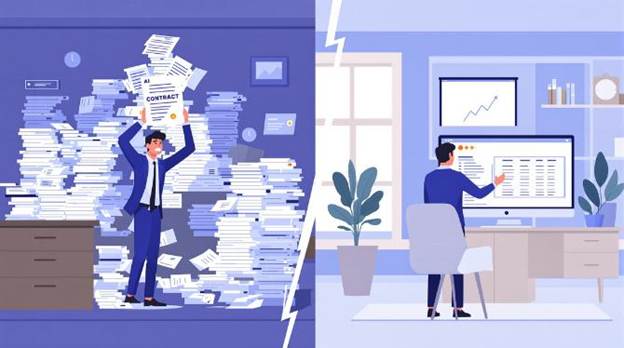
Business owners are some of the hardest-working people you'll ever meet.
They arrive early, leave late, solve problems throughout the day, and constantly think about how to improve their business.
The challenge is that hard work alone doesn't guarantee growth.
Imagine trying to carry water using a bucket with small holes in it.
No matter how hard you work, some of the water continues leaking away.
Manual processes often have the same effect.
Employees repeat tasks that have already been completed. Managers spend hours creating reports instead of analyzing them. Teams communicate the same information multiple times because systems aren't connected.
Everyone stays busy.
But being busy isn't the same as being productive.
Growing businesses eventually reach a point where hiring more employees isn't enough. Without improving the systems behind the business, adding more people often means adding more complexity.
Sustainable growth comes from improving how work gets done.
When repetitive tasks are automated, employees gain more time to solve problems, serve customers, develop new ideas, and improve the business.
Technology shouldn't replace human potential.
It should create more opportunities for people to use it.
Preparing Your Business for the Future

Business has changed dramatically over the past decade.
Customers expect faster responses, online accessibility, personalized experiences, and seamless service. Competition is no longer limited to businesses in the same neighborhood. Today, customers compare experiences across industries and expect every company to meet the same standard of convenience.
Meeting those expectations becomes increasingly difficult when businesses rely on disconnected systems and manual processes.
Digital transformation isn't about following trends or buying software because everyone else is doing it.
It's about building a business that can continue growing without creating unnecessary complexity.
Businesses that embrace technology aren't successful because technology magically solves every problem.
They're successful because they remove repetitive work, reduce unnecessary delays, improve communication, and give people the information they need to make better decisions.
The businesses that thrive in the coming years won't necessarily have the biggest budgets or the largest teams.
They'll be the ones that adapt faster, respond quicker, and operate more intelligently.
How Lacspace Helps Businesses Work Smarter
At Lacspace, we believe technology should simplify business, not complicate it.
Every business is unique, but many face the same underlying challenge: disconnected systems, repetitive manual work, and limited visibility into daily operations. These challenges don't just slow down employees they slow down business growth.
That's why Lacspace develops AI-powered software and digital solutions that help businesses manage operations through one connected ecosystem. Instead of relying on multiple tools, spreadsheets, and manual processes, businesses can centralize their operations, access real-time insights, automate routine tasks, and make informed decisions with confidence.
Whether you're managing a restaurant, retail store, educational institution, healthcare service, or a growing enterprise, the goal remains the same: spend less time managing systems and more time creating value for your customers.
Technology should support your business, not create additional work.
And when your systems work together, your people can focus on what they do best.
Final Thoughts
The hidden cost of managing a business manually isn't measured by the price of paper, spreadsheets, or outdated software.
It's measured by the opportunities that quietly disappear every day.
It's the customer who leaves because service was slower than expected.
The employee who spends another hour preparing reports instead of helping customers.
The manager who delays an important decision because accurate information isn't available.
The business owner who works harder every year but wonders why growth still feels difficult.
None of these situations happen because businesses lack ambition.
They happen because the systems supporting the business haven't evolved alongside it.
Every growing business reaches a point where working harder is no longer enough.
At that point, success depends on working smarter.
The sooner businesses recognize the hidden costs of manual management, the sooner they can invest their time, energy, and resources into what truly matters—serving customers better, making smarter decisions, and building a business that's ready for the future.
The question isn't whether manual processes still work.
The real question is:
Are they helping your business grow or quietly holding it back?
Frequently Asked Questions
What are the hidden costs of managing a business manually?
Manual business management often results in wasted time, repetitive work, human errors, delayed decision-making, and inconsistent customer experiences. While these costs may not appear directly in financial reports, they significantly impact productivity and long-term business growth.
How do manual processes affect customer satisfaction?
Manual processes can lead to slow service, incorrect orders, inaccurate inventory information, billing mistakes, and delayed responses. Customers judge businesses based on their experience, making efficient operations essential for customer satisfaction.
Why should growing businesses invest in digital transformation?
As businesses grow, manual systems become increasingly difficult to manage. Digital transformation helps automate repetitive tasks, centralize business information, improve decision-making, and support sustainable growth without adding unnecessary complexity.
Is automation only beneficial for large companies?
Not at all. Small and medium-sized businesses often benefit the most because automation allows them to improve efficiency, reduce operational costs, and prepare for future growth without significantly increasing their workforce.
How can Lacspace help businesses reduce manual work?
Lacspace provides AI-powered software and digital solutions that streamline business operations, automate routine processes, improve collaboration, and provide real-time insights to help businesses operate more efficiently and grow with confidence.
Frequently asked questions
What is the hidden cost of managing a business manually?
It is the time lost searching for information, sales lost to inaccurate inventory, staff hours spent correcting mistakes and decisions delayed by unreliable data. These costs never appear in financial statements but quietly reduce productivity and slow growth.
Why do businesses keep running on manual processes?
Because the problems do not appear all at once. They show up as one small delay, one forgotten update or one avoidable mistake at a time, which individually seem insignificant but together create an invisible barrier to growth.
When do manual processes stop working?
Simple methods like paper orders or Excel inventory work well with few customers and a small team. The challenge begins with growth, as more customers, employees, products and decisions make the original processes difficult to manage.