Artificial Intelligence is one of the most talked-about technologies of our time. Every day, we hear stories about AI writing content, generating images, answering customer questions, analyzing data, and helping businesses make faster decisions. As these technologies continue to evolve, many business owners and professionals find themselves asking an important question:
Can AI replace employees in the future?
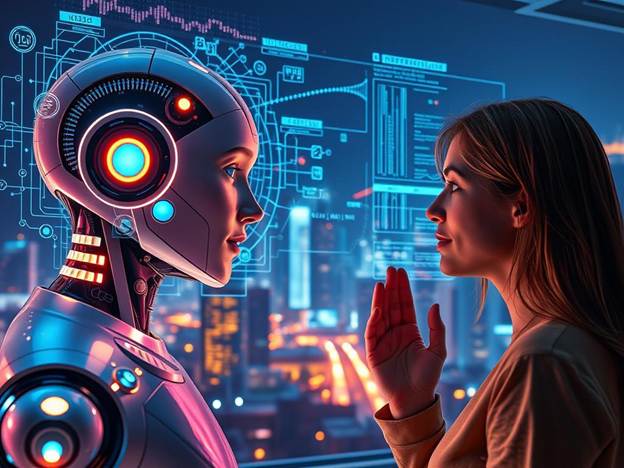
It's a question that sparks both excitement and concern.
Some people believe AI will create incredible opportunities and make businesses more productive than ever before. Others worry that machines will eventually take over human jobs.
The truth is somewhere in between.
To understand whether AI can replace employees, we need to look beyond today's technology and think about what the future might hold.
The Reality of AI Today
If we focus on today's AI, the answer is relatively simple.
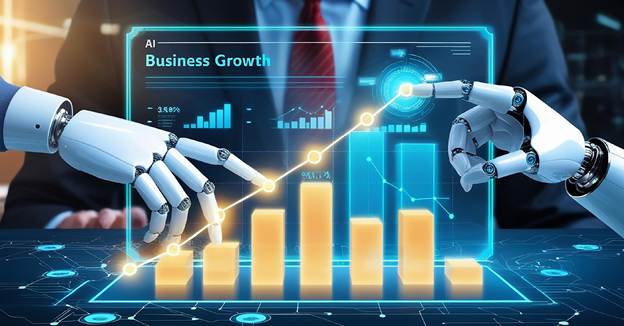
AI can automate tasks, but it cannot fully replace employees.
Modern AI systems are incredibly powerful. They can process information in seconds, recognize patterns in massive datasets, automate repetitive workflows, and even communicate with customers through chatbots and virtual assistants.
Businesses around the world are already using AI to save time and improve efficiency.
For example, a customer support team can use AI to answer common questions instantly. Marketing teams can use AI to generate content ideas. Accountants can use AI-powered software to automate data entry and reporting.
These tools reduce workload and increase productivity.
However, despite all these capabilities, AI still lacks many qualities that make humans valuable.
It doesn't truly understand emotions.
It doesn't have personal experiences.
It doesn't build genuine relationships.
It doesn't feel responsibility, ambition, empathy, or passion in the way humans do.
This is why AI is currently best viewed as a powerful assistant rather than a complete replacement for employees.
Looking Beyond Today's Technology
But what if we stop thinking about AI as it exists today?
History has shown us that technology evolves much faster than people expect.
Just a few decades ago, carrying a powerful computer in your pocket sounded impossible. Video calls felt futuristic. Online shopping was still new. Self-driving vehicles seemed like science fiction.
Today, these technologies are becoming part of everyday life.
The same thing could happen with Artificial Intelligence.
The AI systems we use today may only represent the early stages of what is possible.
As computing power increases and research advances, future AI systems could become far more sophisticated than anything we currently see.
This raises an important question:
What happens if AI eventually develops abilities that are currently unique to humans?
What Makes Humans Different?

One of the biggest reasons AI hasn't replaced employees is because humans offer something technology cannot easily replicate.
Think about the best manager you've ever worked with.
Were they great because they processed information quickly?
Probably not.
They were likely great because they understood people. They knew how to motivate a team, solve conflicts, build trust, and make difficult decisions under pressure.
Now think about your favorite teacher.
Their impact probably wasn't limited to sharing information. They inspired, encouraged, and guided students through challenges.
These qualities come from human experiences, emotions, intuition, and understanding.
A customer service representative doesn't simply solve problems. They reassure worried customers.
A business owner doesn't only analyze numbers. They take risks, follow instincts, and make decisions based on years of experience.
A leader doesn't just manage tasks. They inspire people to achieve a shared vision.
These human qualities remain difficult for AI to replicate.
What If AI Becomes More Human?
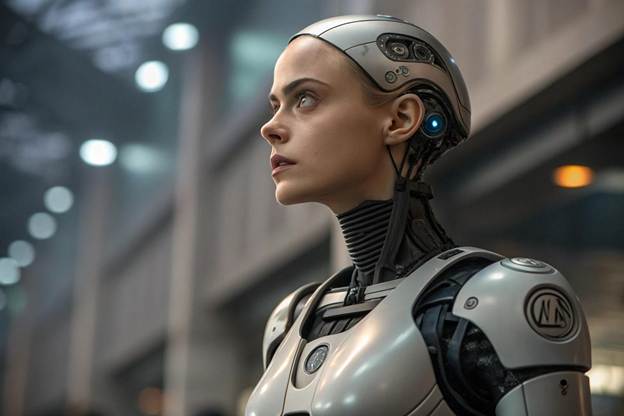
Now let's imagine a future that may be decades away.
Suppose AI reaches a point where it can understand emotions, learn from experiences, adapt to unexpected situations, communicate naturally, and build meaningful relationships.
Imagine an AI customer support assistant that not only answers questions but also recognizes frustration, understands emotions, and responds in a way that feels completely human.
Imagine an AI manager capable of monitoring an entire business in real time, identifying problems before they occur, and recommending solutions instantly.
Imagine AI systems that can learn continuously, improve independently, and demonstrate levels of creativity that rival human professionals.
At that point, AI would no longer be just another software tool.
It would become something much closer to a human colleague.
If such technology becomes reality, many jobs could be transformed dramatically.
Tasks that currently require human intelligence could potentially be performed by highly advanced AI systems.
This possibility is what leads many people to believe AI could eventually replace employees.
Could Entire Jobs Disappear?
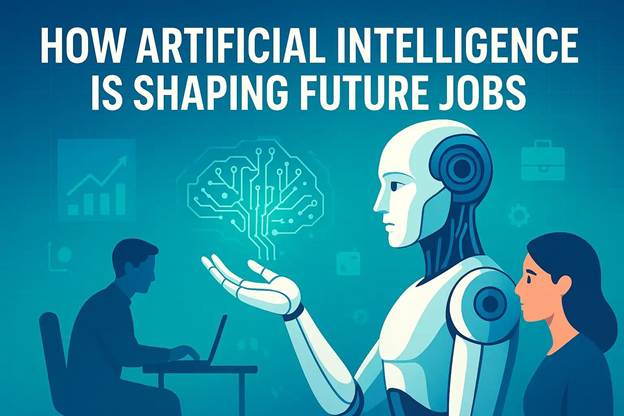
Possibly.
History shows that technological advancements often change the nature of work.
When machines entered factories, many manual jobs disappeared.
When computers became common in offices, administrative work changed significantly.
When the internet transformed communication and commerce, entire industries evolved.
AI may continue this pattern.
Jobs that involve repetitive, predictable, and rule-based activities are the most likely to be affected.
Tasks such as data entry, scheduling, basic customer support, routine reporting, and simple administrative work are already becoming increasingly automated.
As AI continues to improve, these changes may accelerate.
However, this doesn't necessarily mean people will become obsolete.
More often than not, technology changes jobs rather than eliminating the need for workers entirely.
Humans Have Always Adapted
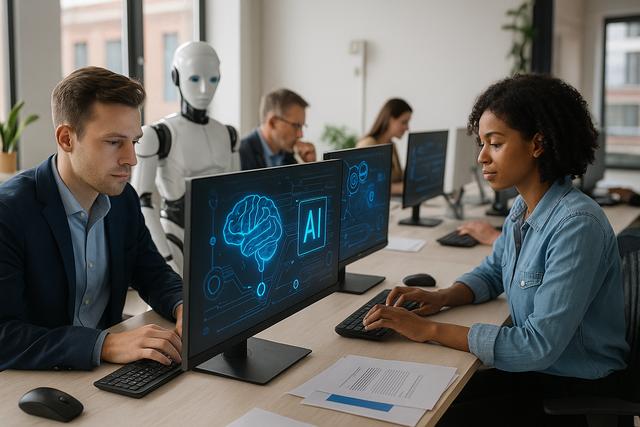
One reason many experts remain optimistic is because humans have consistently adapted to technological change.
Every major innovation throughout history has created new opportunities.
Before the internet existed, there were no social media managers.
Before smartphones, there were no app developers.
Before digital marketing, businesses relied entirely on traditional advertising channels.
Technology eliminated certain tasks, but it also created entirely new industries.
The same may happen with AI.
Future businesses may employ AI trainers, automation consultants, AI ethics specialists, human-AI collaboration experts, virtual experience designers, and many other professionals whose jobs don't exist today.
While some roles may become automated, new opportunities are likely to emerge alongside them.
Will People Always Prefer Human Interaction?

Even if AI becomes incredibly advanced, there is another important question worth considering.
Will people always prefer interacting with other people?
Think about healthcare.
An AI system might diagnose a medical condition accurately, but many patients still want reassurance from a human doctor.
Think about education.
An AI tutor might deliver lessons efficiently, but students often benefit from encouragement and mentorship from real teachers.
The same applies to business.
Customers may appreciate automation when checking an order status or booking an appointment.
However, when making important decisions or solving complex problems, many people still value genuine human interaction.
Trust is not built through efficiency alone.
It's built through connection.
And human connection remains one of the most powerful forces in business.
The Most Likely Future: Humans and AI Working Together
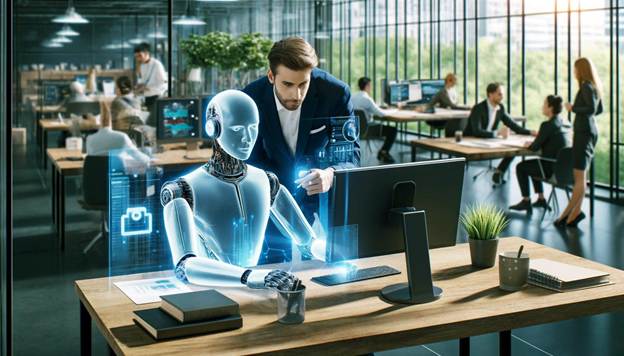
Despite the headlines we often see online, the most realistic future is not one where humans are completely replaced by AI.
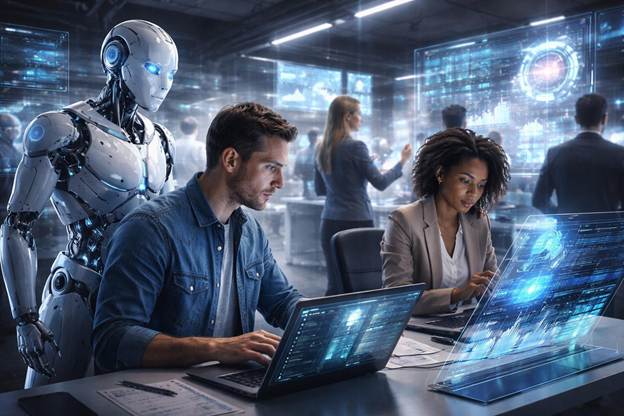
Instead, it's a future where humans and AI work together.
Imagine a workplace where AI handles repetitive tasks, analyzes data instantly, identifies trends, and provides recommendations.
Meanwhile, employees focus on creativity, leadership, innovation, strategic thinking, and relationship building.
In this scenario, AI doesn't replace people.
It enhances what people are capable of achieving.
Employees spend less time on routine work and more time creating value.
Businesses become more efficient while maintaining the human touch that customers appreciate.
Rather than competing against humans, AI becomes a tool that helps humans perform better.
What This Means for Businesses Today
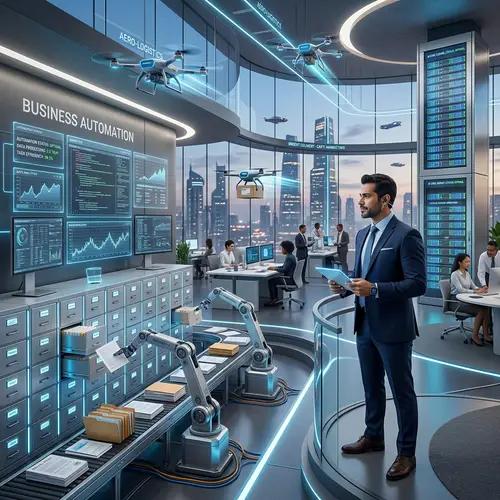
For business owners, the goal shouldn't be replacing employees with AI.
The goal should be empowering employees with AI.
Businesses that use AI effectively can reduce repetitive work, improve productivity, make faster decisions, and deliver better customer experiences.
At the same time, they can allow their teams to focus on higher-value activities that require human creativity and judgment.
Companies that ignore AI may struggle to remain competitive.
But companies that rely entirely on automation and overlook the importance of people may also face challenges.
The strongest organizations will likely be those that successfully combine human strengths with technological innovation.
How Lacspace Helps Businesses Prepare for the Future
At Lacspace, we believe technology should empower people, not replace them.
Our AI-powered software solutions help businesses automate routine processes, streamline operations, improve productivity, and make smarter decisions while allowing employees to focus on the work that matters most.
Whether it's custom software development, ERP systems, restaurant management platforms, school management solutions, digital transformation services, or business automation tools, our goal is to help organizations embrace innovation without losing the human element that drives long-term success.
The future belongs to businesses that can successfully combine technology with human creativity.
Conclusion
So, can AI replace employees in the future?
Perhaps some jobs will become highly automated as technology advances. AI may eventually perform tasks that currently require significant human involvement.
But history suggests that technological progress doesn't eliminate the need for people. Instead, it changes how people work and creates new opportunities along the way.
The future is unlikely to be a battle between humans and AI.
It's more likely to be a partnership.
Businesses that learn how to combine human creativity, emotional intelligence, and leadership with the speed and efficiency of AI will be best positioned for success.
The real question isn't whether AI will replace humans.
The real question is whether businesses are ready to adapt to a future where humans and AI achieve more together than either could alone.
Frequently Asked Questions (FAQs)
Will AI completely replace employees in the future?
Not entirely. While AI may automate many tasks and transform industries, jobs that require creativity, leadership, emotional intelligence, and relationship building will continue to benefit from human involvement.
Which jobs are most likely to be affected by AI?
Jobs involving repetitive and predictable tasks such as data entry, scheduling, basic customer support, and routine administrative work are most likely to experience significant automation.
Can AI make better decisions than humans?
AI can analyze data much faster than humans and provide valuable insights. However, strategic decisions often require judgment, ethics, experience, and emotional understanding, which remain important human strengths.
What jobs are least likely to be replaced by AI?
Roles that depend heavily on creativity, leadership, negotiation, emotional intelligence, and human relationships are generally less likely to be fully automated.
Will AI create new jobs?
History suggests that new technologies often create new industries and career opportunities. AI is expected to generate new roles related to automation, AI management, ethics, training, and human-AI collaboration.
Should businesses start using AI now?
Yes. Businesses that adopt AI today can improve efficiency, reduce repetitive work, and gain a competitive advantage while preparing for future technological developments.
How can Lacspace help businesses adopt AI?
Lacspace provides AI-powered software solutions, business automation systems, ERP platforms, custom software development, and digital transformation services designed to help organizations work smarter and grow faster.
Frequently asked questions
Can AI replace employees today?
Not fully. Today's AI can automate tasks such as answering common customer questions, generating content ideas and automating data entry, but it cannot fully replace employees. It is best viewed as a powerful assistant.
What can humans do that AI cannot?
AI doesn't truly understand emotions, have personal experiences or build genuine relationships. It doesn't feel responsibility, ambition, empathy or passion the way humans do, which is what makes people valuable at work.
How are businesses using AI right now?
Customer support teams use AI to answer common questions instantly, marketing teams use it to generate content ideas, and accountants use AI-powered software to automate data entry and reporting, reducing workload and increasing productivity.