
Mobile app development for iPhone and Android, from one team.
A good app does one job well on the phone people already carry: book a slot, track a parcel, place a trade, check a balance. A poor one is slow, drains the battery and gets uninstalled in a week. The difference is mostly in the details nobody sees in a pitch deck.
How we approach it
Lacspace builds and publishes its own apps on the App Store and Google Play, and keeps them running. Client apps get the same treatment: one codebase for iPhone and Android, careful design for small screens, store publishing handled for you, and updates that reach users without waiting for a new store review when the change allows it.
One codebase, two platforms
iPhone and Android apps built together, so features ship to both at once and the budget is not spent twice.
Design for the thumb
Screens designed for one-handed use, real network conditions and older phones, with light and dark themes.
Offline-first where it matters
Apps for field staff, riders and shops keep working without a signal and sync when the connection returns.
Push notifications and deep links
Order updates, reminders and alerts that open the right screen, set up with the store accounts and certificates done for you.
Store publishing
Listings, screenshots, privacy details and review submissions for the App Store and Google Play, under your own developer accounts.
Updates after launch
Small fixes and content changes delivered over the air when the change allows it, and planned store releases for everything else.
How the project runs
- 01
First call
Who the app is for, the one or two jobs it must do brilliantly, and what already exists on the web or in your back office.
- 02
Scope and quote
Screens, features, back-end needs, store requirements, timeline and price, in writing.
- 03
Design and prototype
A clickable prototype you can hold in your hand and test with real users before we build.
- 04
Build and test on real phones
Releases you install on your own phone through test builds, so feedback starts early.
- 05
Publish and improve
We handle store submission, watch crash reports and reviews after launch, and keep improving under a support plan.
The technology, in plain words
We build mobile apps with React Native and Expo, the same approach we use for our own apps. One TypeScript codebase produces native iPhone and Android apps, which keeps cost and release effort down without giving up native performance for the things users notice.
Apps talk to a secure API we build or connect to yours. Sign-in, payments, push notifications, maps and camera features use the platforms' own services, and every release is tested on real devices before it reaches the stores.
Who it is for
- Businesses whose customers book, order or track things on their phones
- Companies with field staff, riders or agents who need a reliable work app
- Founders launching a consumer or marketplace app
- Teams with a working website that now needs a proper app
- Organisations replacing an app that is slow, buggy or hard to update
Related client work
Case studies from projects we built, written from what was actually delivered.
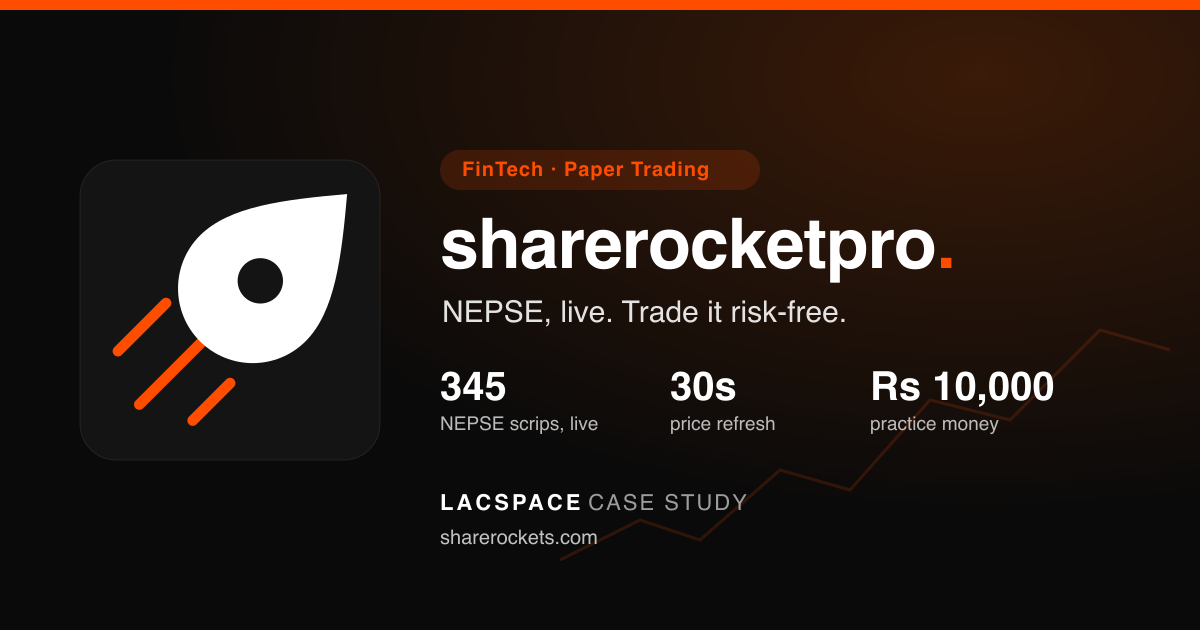 FintechShareRocketProLacspace built and maintains ShareRocketPro — live NEPSE market data for all 345 listed scrips, plus an iOS and Android paper-trading app with Rs. 10,000 practice money and a 24/7 practice market. The client found us through StockYatra, our own paper-trading app.Read the case study
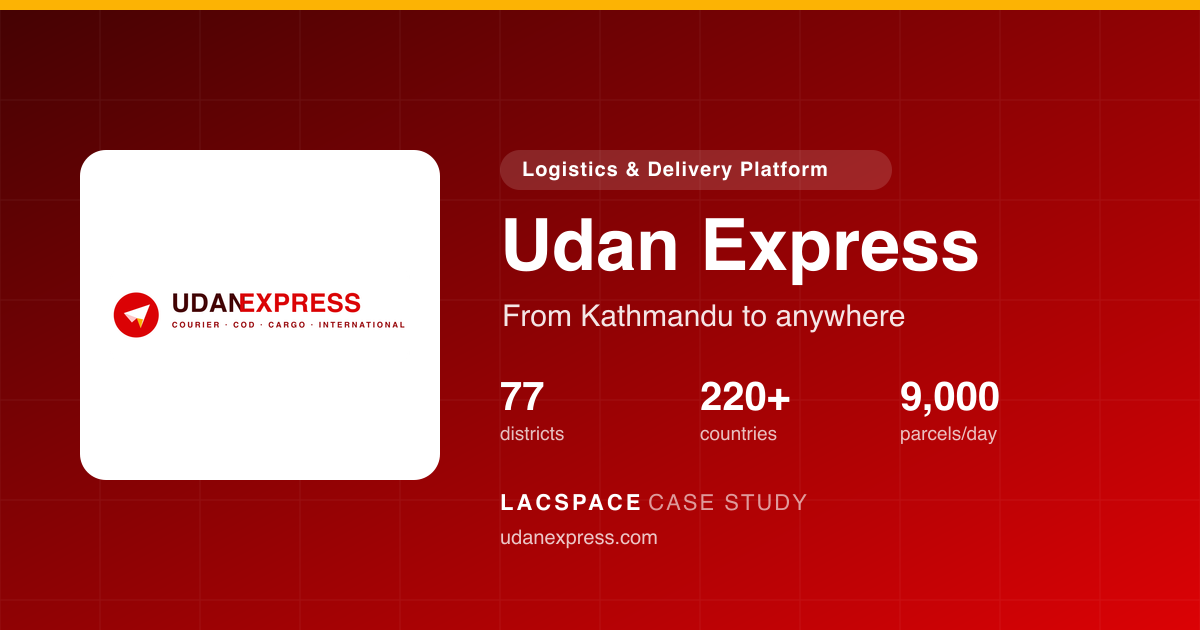 LogisticsUdan ExpressLacspace built Udan Express end to end — a courier, cash-on-delivery, cargo and international delivery platform covering all 77 districts of Nepal and 220+ countries, with a merchant dashboard, live tracking, weekly COD settlement, a rate calculator, a REST API and offline-first rider apps.Read the case study
Also in products we build and run
Questions buyers ask
Do you build native or cross-platform apps?
We build with React Native, which produces real native apps for iPhone and Android from one codebase. For nearly all business and consumer apps this gives native performance at a lower cost than building two separate apps.
How much does it cost to build a mobile app?
Cost depends on the number of screens, whether the app needs its own back end, payments, maps or offline sync, and how many user roles there are. You get a written scope and price after the first call.
Will you publish the app on the App Store and Google Play?
Yes. We prepare the store listings, screenshots and privacy answers and handle submission and review. The apps are published under your own developer accounts, so you own them.
Can the app work without internet?
Yes, when the job needs it. Apps for riders, field staff and shops can store work on the phone and sync when the connection returns, so nothing is lost in a weak-signal area.
How are updates handled after launch?
Small fixes and content changes can be delivered over the air without a new store review. Bigger changes go out as normal store releases. Both can be covered by a support plan.
Related reading
- How We Built StockYatra: A Paper-Trading App for Three Stock MarketsEngineering
- How Lacspace Built iSmartExams: App, Portal, Payments and CertificatesCase Study
- Demo Restro by Lacspace: The Perfect Ready-to-Use Restaurant Template for Websites & Mobile AppsTechnology & Business
- LSKhata Is Now on iOS: Billing, Inventory & Khata on iPhoneBusiness & Finance
Related services
- UI/UX designUI/UX design for web and mobile products: research, wireframes, clickable prototypes, usability checks and design systems your developers can build from.
- Custom software developmentCustom web platforms, internal tools, APIs and integrations, scoped in writing and built in short releases by a team that runs its own software products.
- MVP developmentMVP development for startups: we scope the smallest product that tests your idea, design and build it for web or mobile, launch it and help you learn from it.
- Every service we offer
Tell us what you need built.
Start with a call. You get a written scope and price before anything is agreed.