Every morning, long before most of Kathmandu is awake, a cart moves through the lanes. Old newspapers, a broken fan, a sack of plastic bottles, a coil of copper wire — the things a city throws away become the day’s work for the men who collect it. It is hard, honest, invisible work. And for years, one of those men was Dhiraj Yadav.
He did not own the trade he worked in. A company would call, send him to a client, and he would buy whatever scrap they had — weighing it, paying for it, hauling it, and selling it on for a small margin. Some days that margin was good. Many days it was not. But Dhiraj worked harder than the odds, and something else set him apart: he was not ashamed of the kabadi life. He documented it, shared it, and turned an invisible trade into something people actually stopped to watch — becoming a familiar, viral face of Nepal’s scrap world along the way.
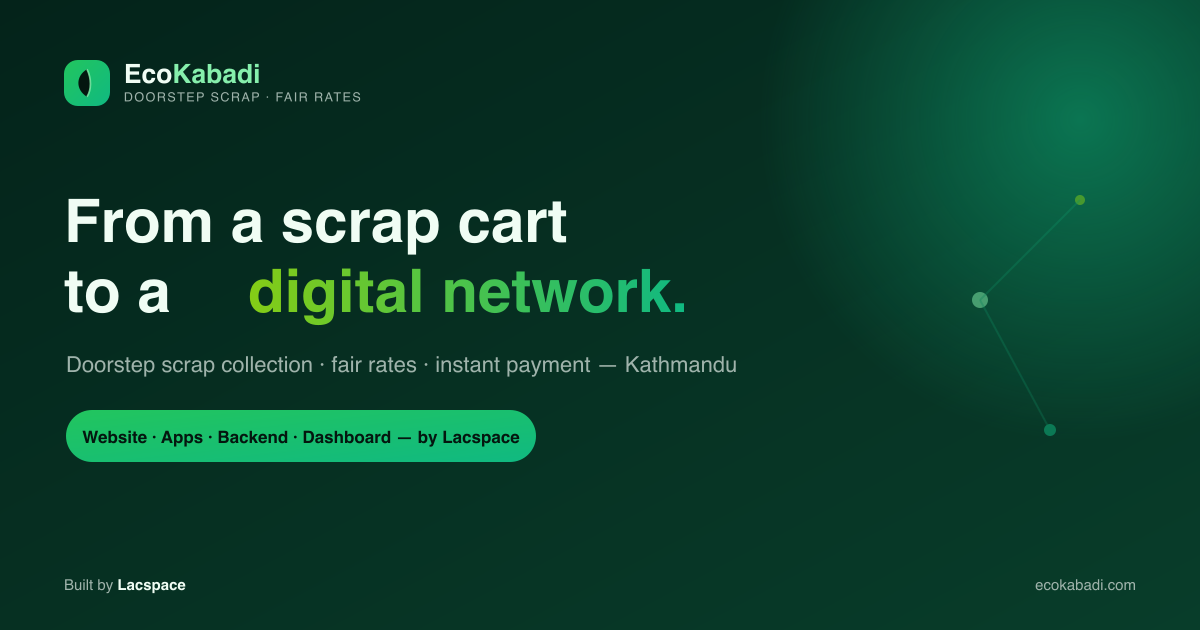
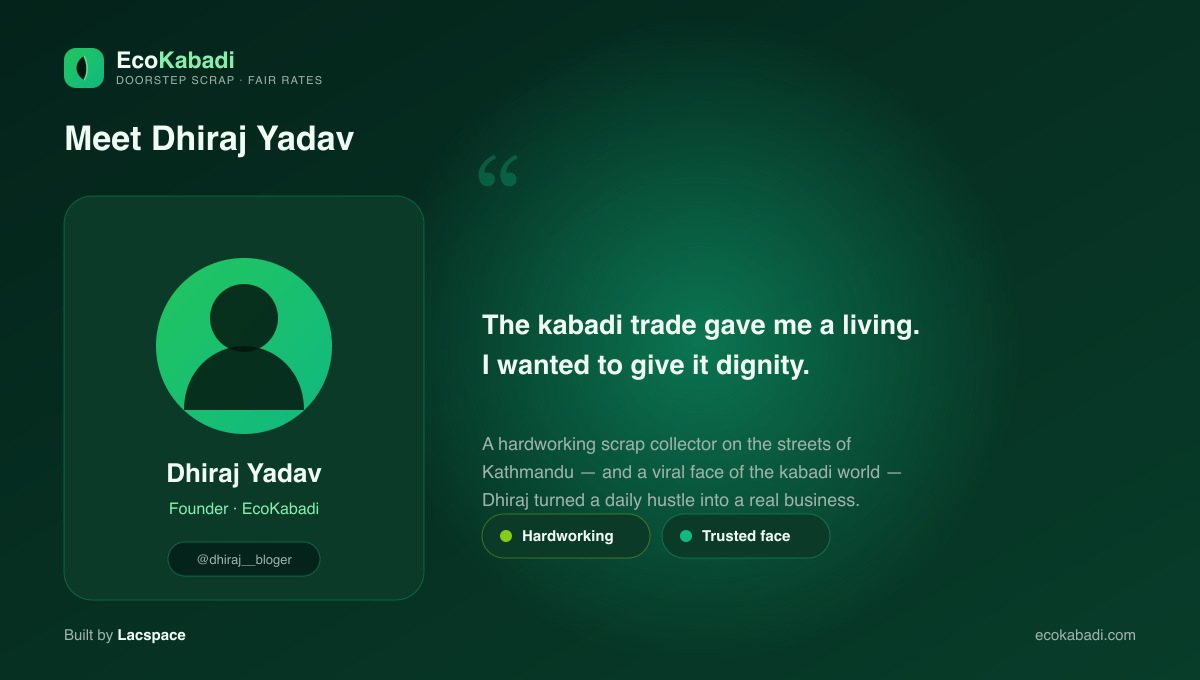
Meet the man behind EcoKabadi
Talk to Dhiraj for five minutes and one thing is obvious — he loves this trade, and he is tired of watching it treated as something less than a real business. On his phone he is @dhiraj__bloger, filming pickups, prices and the everyday reality of the kabadi hustle for a growing audience. On the street he is the collector who shows up on time, weighs fairly, and remembers your name.
That audience taught him something important: people wanted a better way to sell their scrap. They wanted a fair price without the argument. They wanted someone they could trust at the door. They wanted it to feel less like being hustled and more like a service. Dhiraj had the trust and the face. What he needed was the machine to run it.
The problem: a trade built on haggling and guesswork
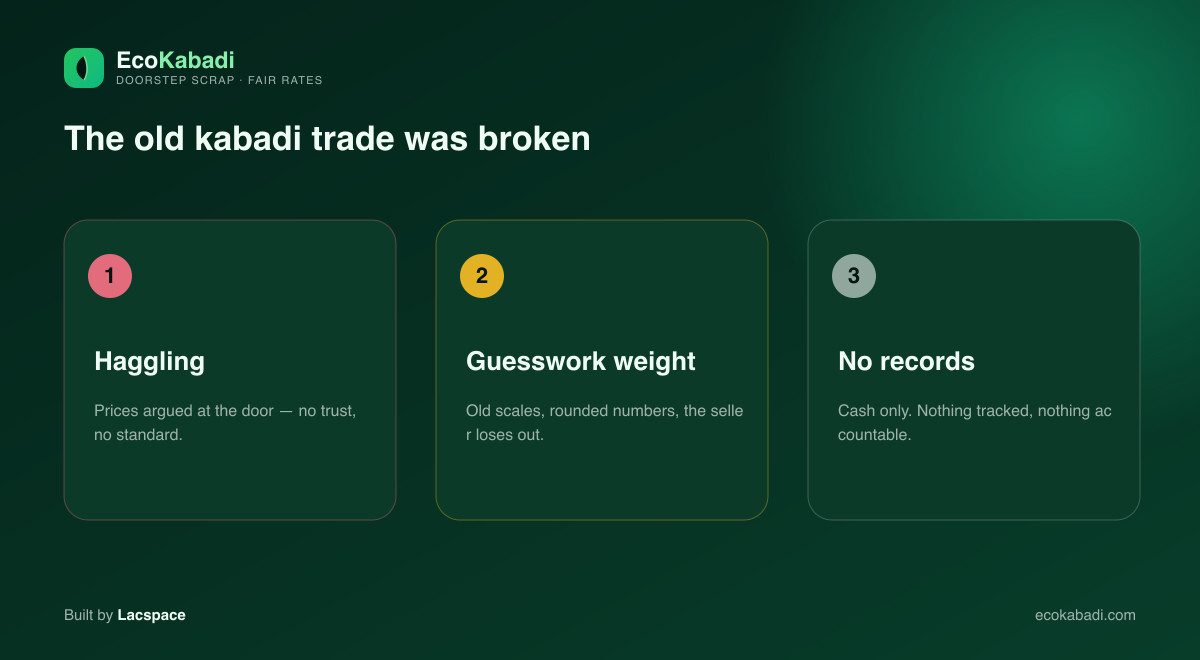
For all its scale, the informal scrap trade runs on friction. Prices are argued at the doorstep with no standard to point to. Weighing is done on tired scales and rounded numbers, and it is almost always the seller who loses a little. Everything is cash, nothing is recorded, and the collectors themselves — the people doing the actual work — are the least visible and least valued part of the chain.
None of that is a people problem. It is an infrastructure problem. There was simply never a system that made the honest way the easy way.
The partnership: Dhiraj’s vision, Lacspace’s stack
This is where the two halves of the story meet. Dhiraj brought the thing no software can generate: a real trade, real trust, and a face people already followed. Lacspace brought the thing he could not build alone — the technology to turn a one-man hustle into a company.
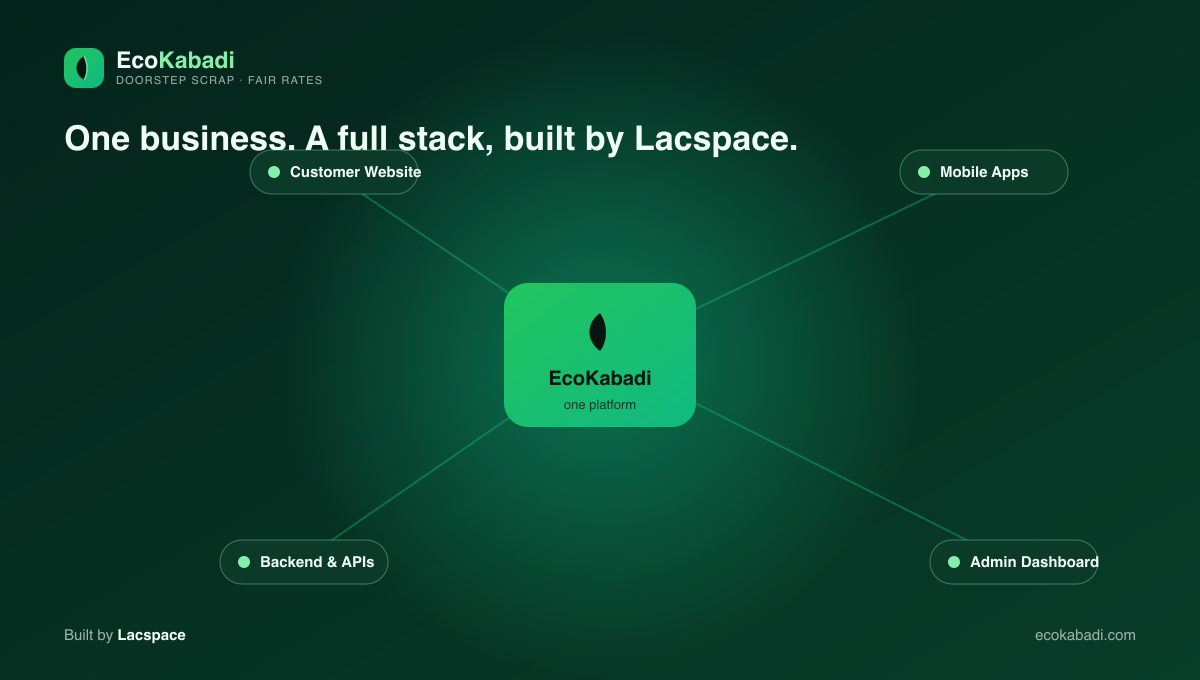
We did not hand him an app and wish him luck. As his technology partner, Lacspace designed and built the entire stack EcoKabadi runs on:
- A customer website — ecokabadi.com — where anyone can see live rates and book a pickup in seconds.
- Mobile apps for customers and collectors — booking, live status, digital weighing and payment in your hand.
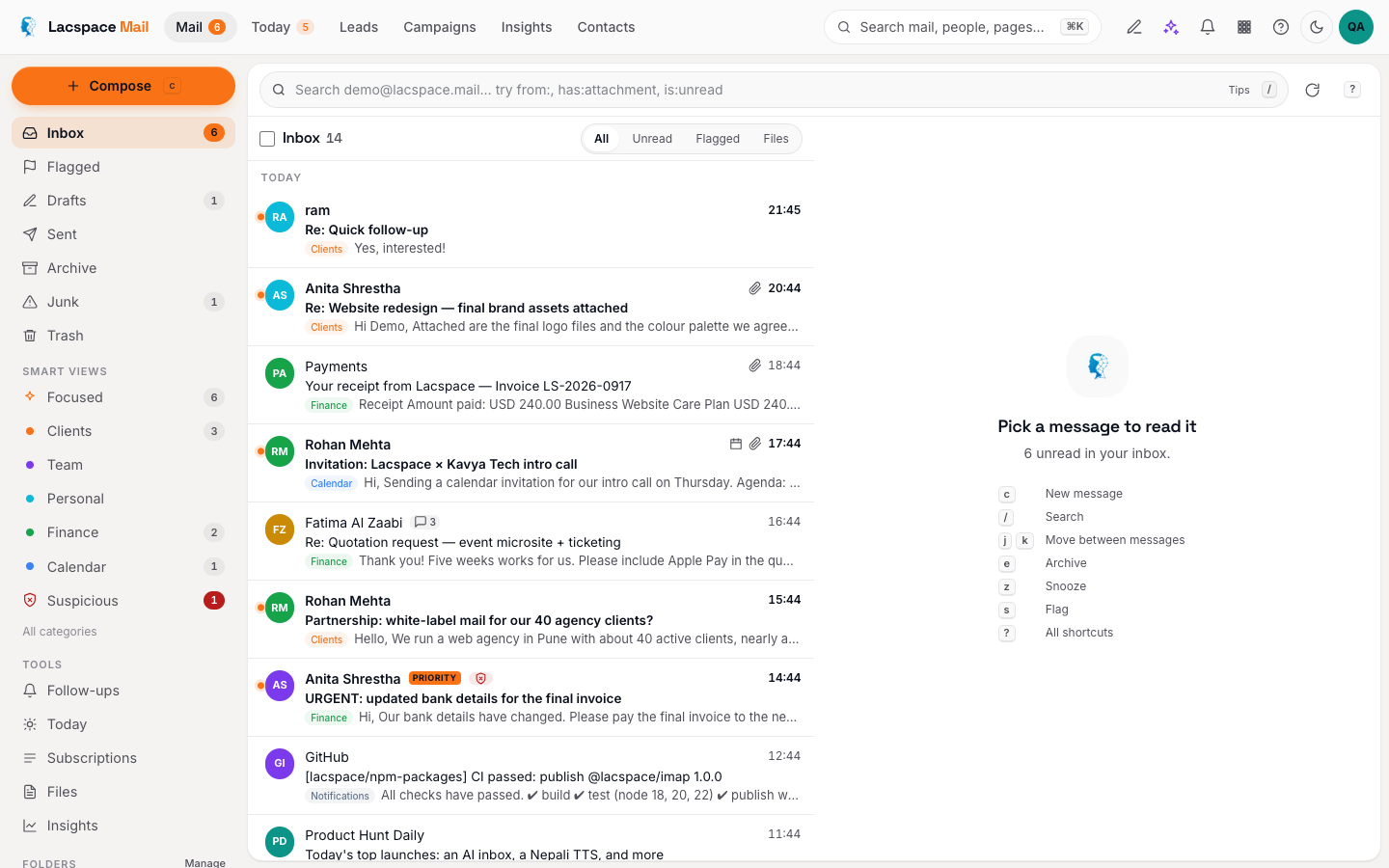
- A backend and APIs — the engine that holds rates, bookings, users, payments and every transaction in one place.
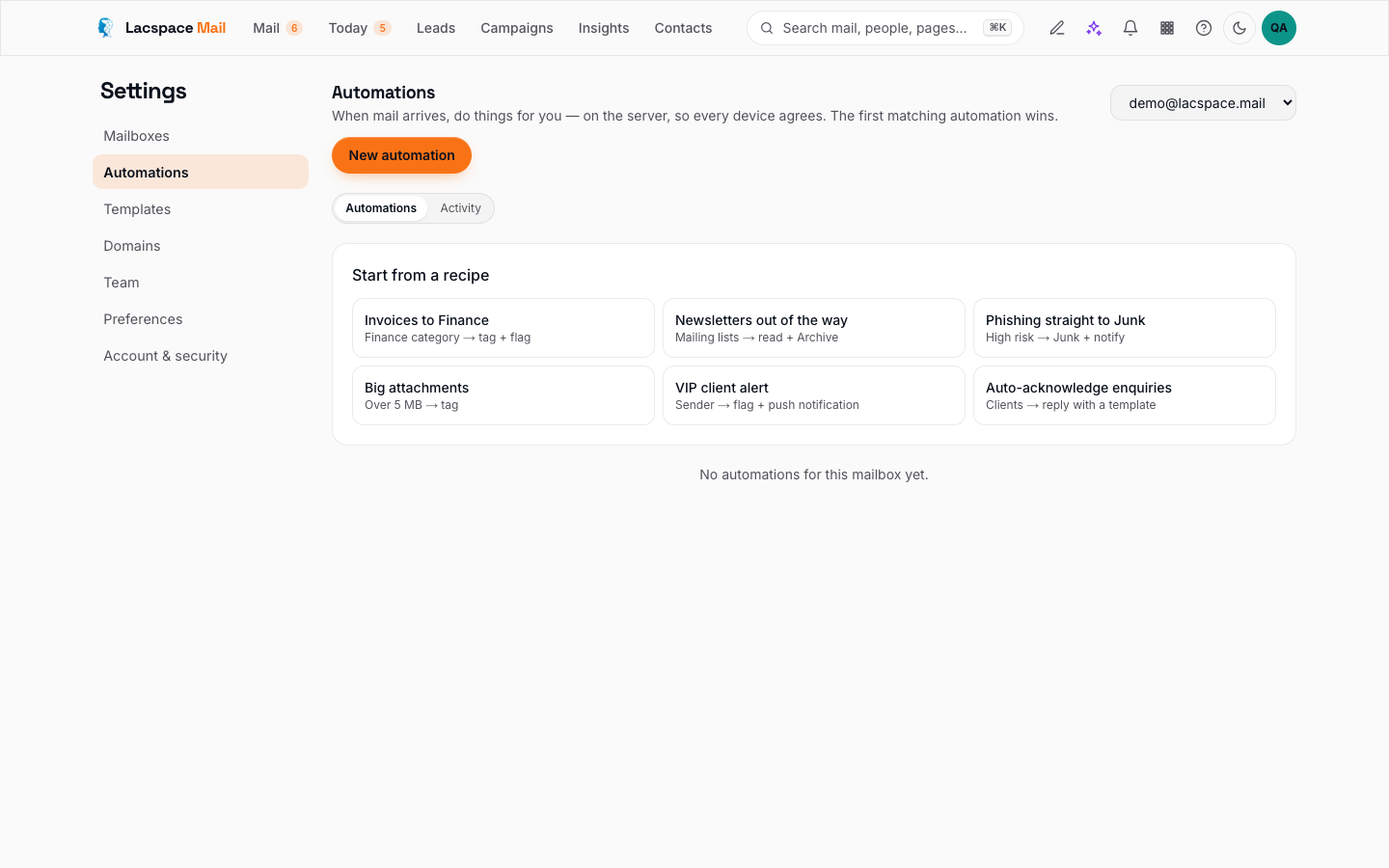
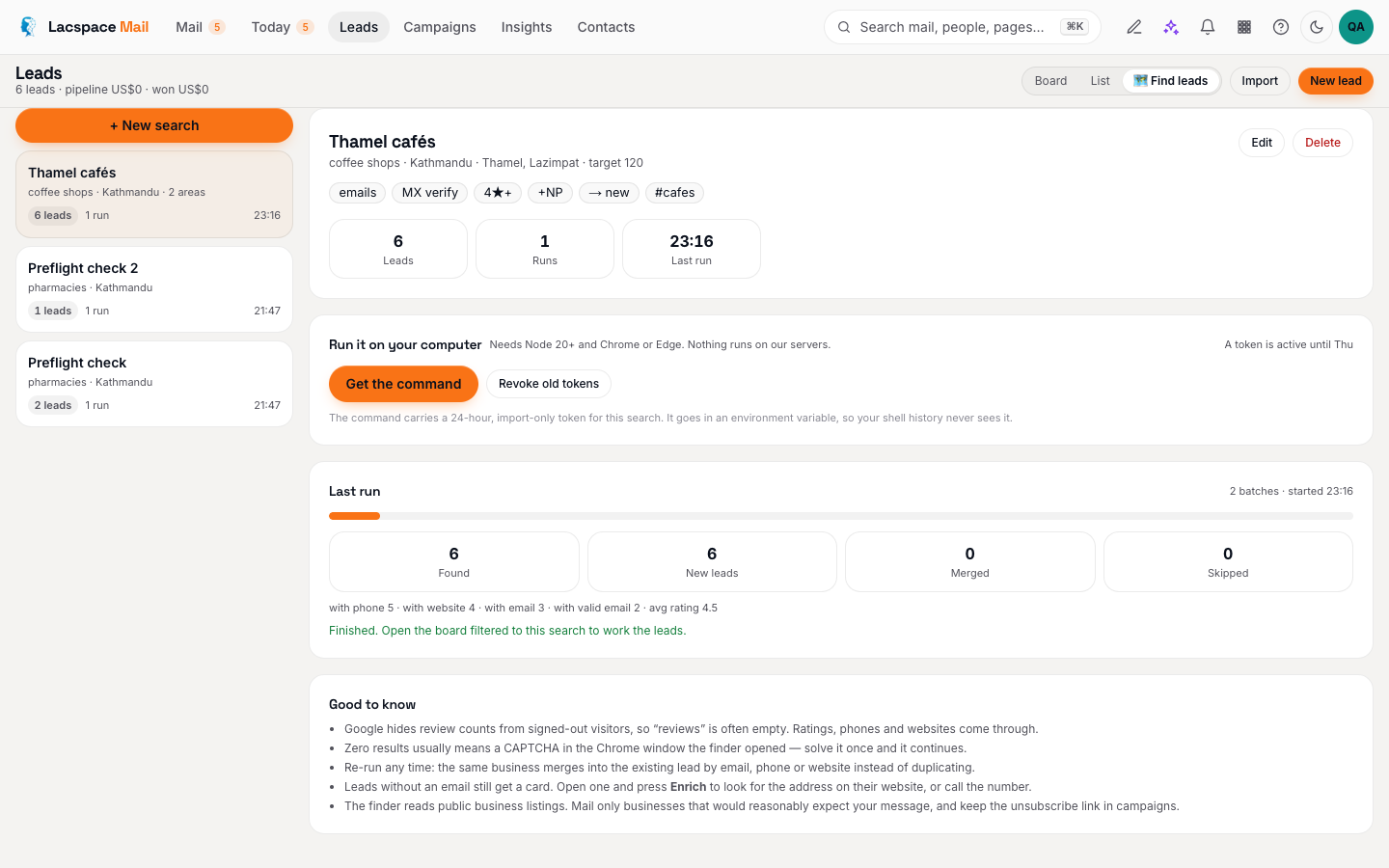
- An admin dashboard — the control room where the whole business is run: verified collectors, routing, pricing, payouts and impact reporting.
One vision, one platform, four connected systems — so a business that used to live in Dhiraj’s head and his notebook now runs on infrastructure that can scale far past what one cart ever could.
How EcoKabadi works now
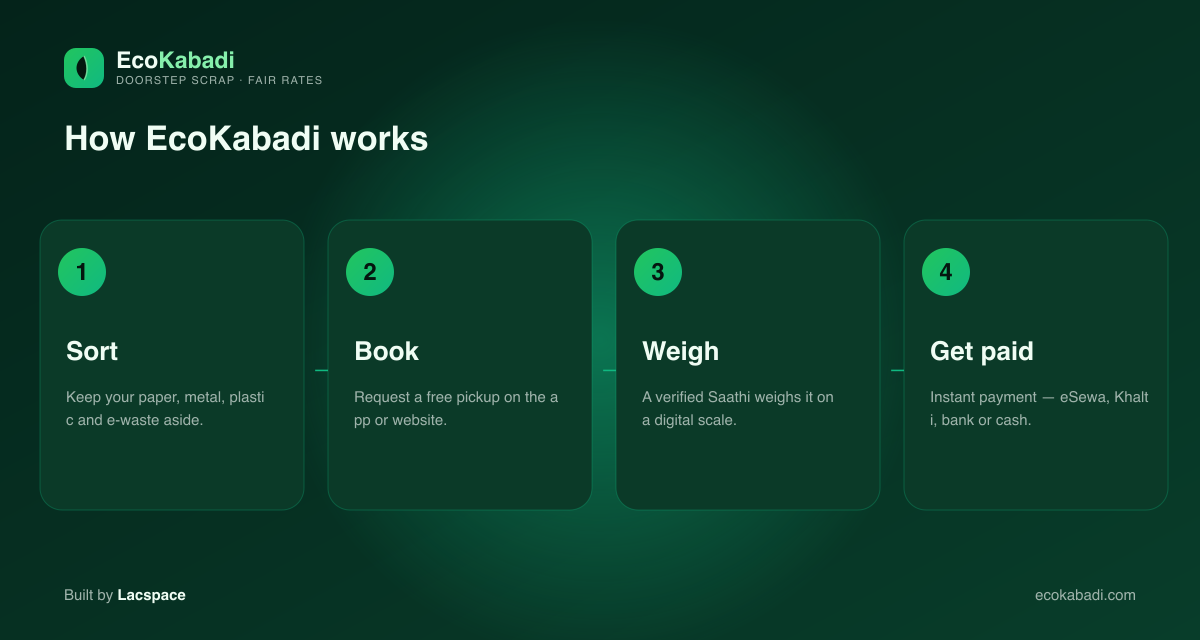
The magic is that all of that engineering disappears into something a customer can do in under a minute:
- Sort — keep your paper, metal, plastic and e-waste aside.
- Book — request a free pickup on the app or website.
- Weigh — a verified collector, a Saathi, weighs it on a calibrated digital scale at your door.
- Get paid — instantly, by eSewa, Khalti, bank transfer or cash.
No haggling. No guessing. No wondering whether you were paid fairly. Just a clean, honest way to recycle and earn — with a record of every rupee.
Impact you can measure
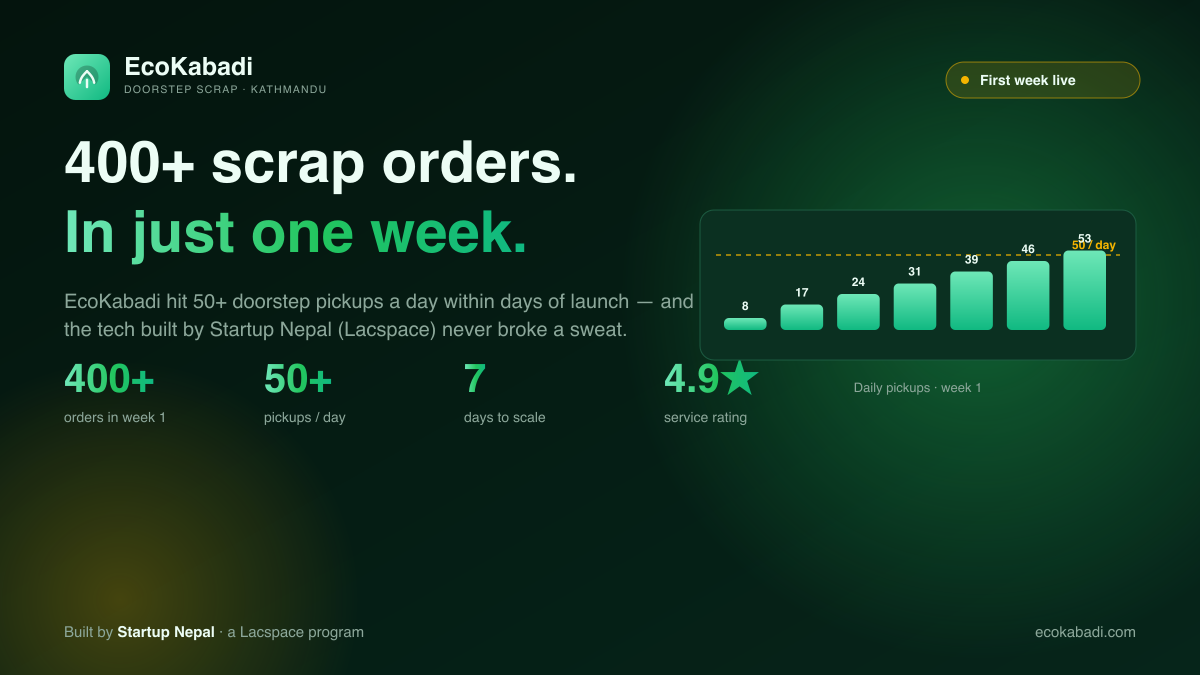
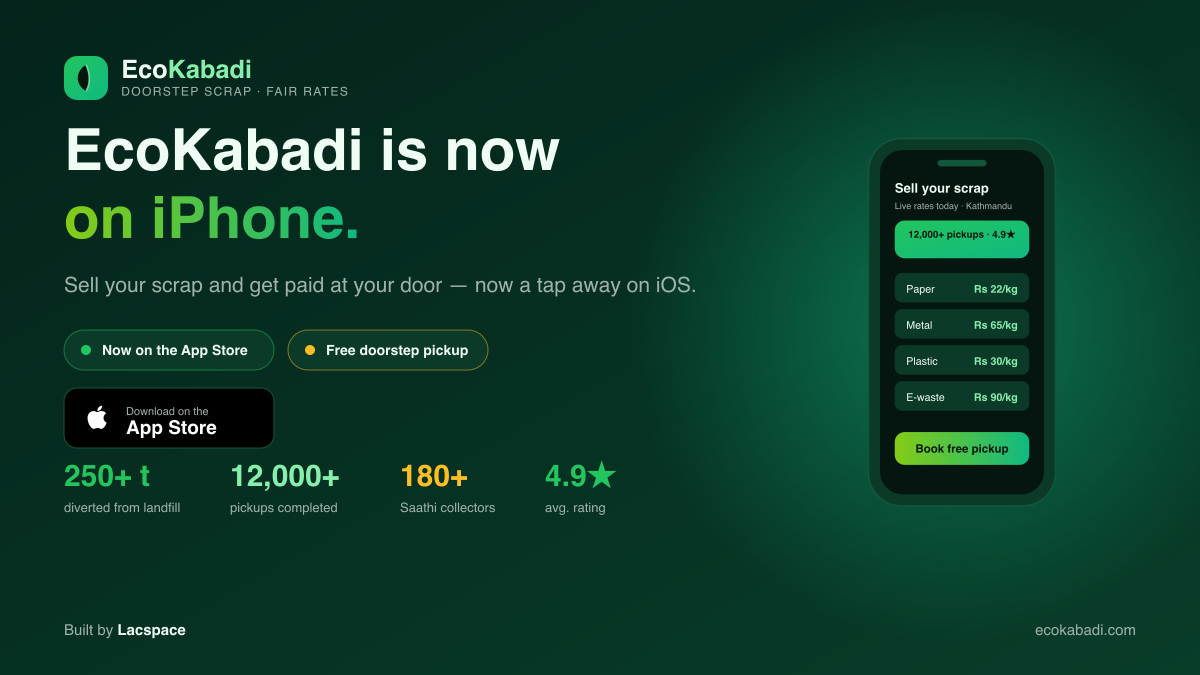
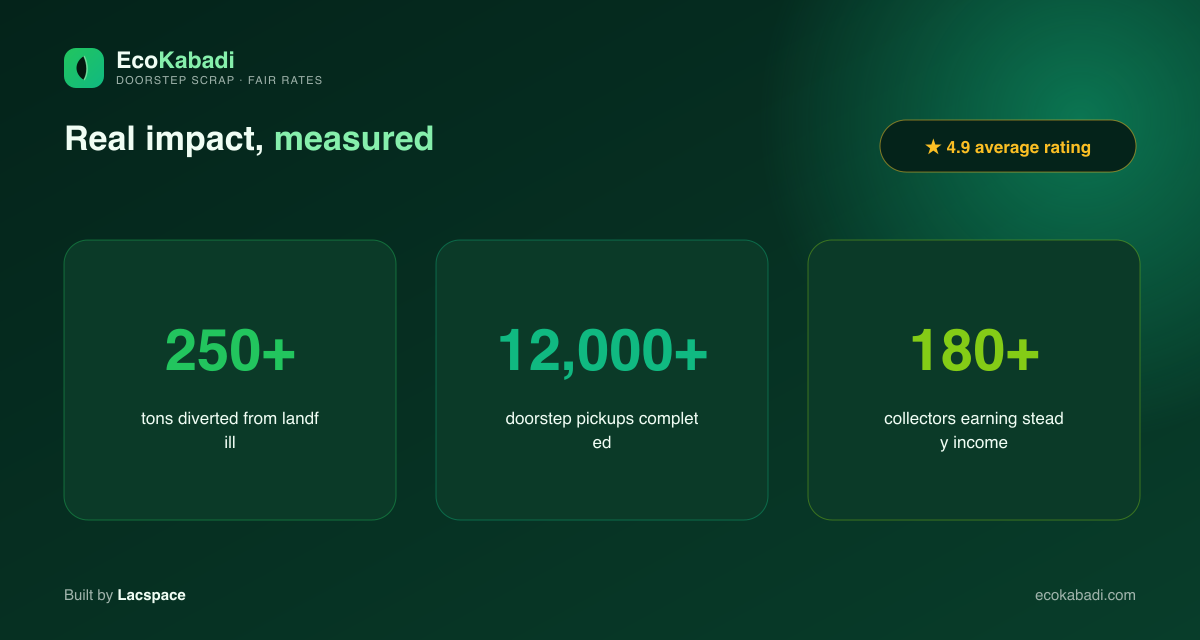
The point of formalising a trade is that you can finally count what it does. EcoKabadi has already diverted more than 250 tons of material from landfill, completed over 12,000 doorstep pickups, and put more than 180 collectors on a path to steady, dignified income — at an average service rating of 4.9 stars.
Every one of those numbers is a household that recycled instead of dumped, and a collector who earned with a fair scale and a digital receipt instead of a handshake and a guess. That is what dignity looks like when you give a trade the right tools.
Why this is the Lacspace way
EcoKabadi is not a story about an app. It is a story about a partnership — a hardworking person with a real vision, and a technology partner who could build the whole thing that vision needed. Lacspace does not just ship software; we sit with founders like Dhiraj, understand the business, and build the website, the apps, the backend and the dashboard as one connected platform, then stay on as the long-term tech partner as it grows.
Dhiraj brought the heart of EcoKabadi. We were proud to build the rest — and prouder still to watch a man who once pushed a cart through Kathmandu now run a digital network from a dashboard.
See EcoKabadi in action at ecokabadi.com, and follow Dhiraj’s journey on Instagram at @dhiraj__bloger. Building something of your own? Explore what Lacspace can build with you on the Lacspace products page.
Frequently asked questions
What is EcoKabadi?
EcoKabadi is a doorstep scrap-collection service in the Kathmandu Valley. Households and offices book a free pickup, a verified collector weighs their paper, metal, plastic and e-waste on a calibrated digital scale, and they are paid on the spot — by eSewa, Khalti, bank transfer or cash. It brings transparent pricing and instant payment to a trade that has run on haggling and guesswork for generations.
Who is Dhiraj Yadav?
Dhiraj Yadav is the founder of EcoKabadi. He built his living as a scrap collector on the streets of Kathmandu and became a recognisable, viral face of the kabadi world, sharing his daily work with a growing audience on Instagram (@dhiraj__bloger). EcoKabadi is his vision for giving the trade the fairness, dignity and structure it never had.
What did Lacspace build for EcoKabadi?
Lacspace is EcoKabadi’s technology partner. We built the full stack — the customer website, the mobile apps, the backend and APIs, and the admin dashboard that runs the whole operation: bookings, verified collectors, live scrap rates, digital weighing, payments and impact reporting.
How does an EcoKabadi pickup work?
Four steps. Sort your scrap at home; book a free pickup on the app or website; a verified collector weighs it on a digital scale at your door; you get paid instantly. No haggling, no guesswork, and a record of every transaction.
Is Lacspace a Nepal-based company?
No. Lacspace is a global technology partner that builds software, AI and connected products for clients wherever they are. EcoKabadi is a client platform serving the Kathmandu Valley; Lacspace built and supports the technology behind it.
Frequently asked questions
Who is Dhiraj Yadav?
Dhiraj Yadav worked as a scrap collector in Kathmandu, buying, weighing and hauling scrap for a small margin. He documented the kabadi life as @dhiraj__bloger and became a familiar, viral face of Nepal's scrap world.
What is EcoKabadi?
EcoKabadi is doorstep scrap collection with fair rates and instant payment. Customers can see live rates and book a pickup on ecokabadi.com, with mobile apps for customers and collectors covering booking, live status, digital weighing and payment.
What did Lacspace build for EcoKabadi?
As technology partner, Lacspace designed and built the entire stack: the customer website, mobile apps for customers and collectors, a backend and APIs for rates, bookings, payments and transactions, and an admin dashboard for collectors, routing, pricing, payouts and impact reporting.
What problem does EcoKabadi solve?
The informal scrap trade runs on doorstep haggling with no price standard, guesswork weights on tired scales, and cash with no record. The story frames it as an infrastructure problem: there was never a system that made the honest way the easy way.