A no-show costs a salon more than it looks. The chair sat empty at a time someone else would have taken, the stylist was paid to wait, and a walk-in may have been sent away because the diary said the time was booked.
No-shows never reach zero, but most salons can cut them a lot with a few habits. Here are eight that work, and none of them punish the customers who do turn up.
1. Only offer times that are really free
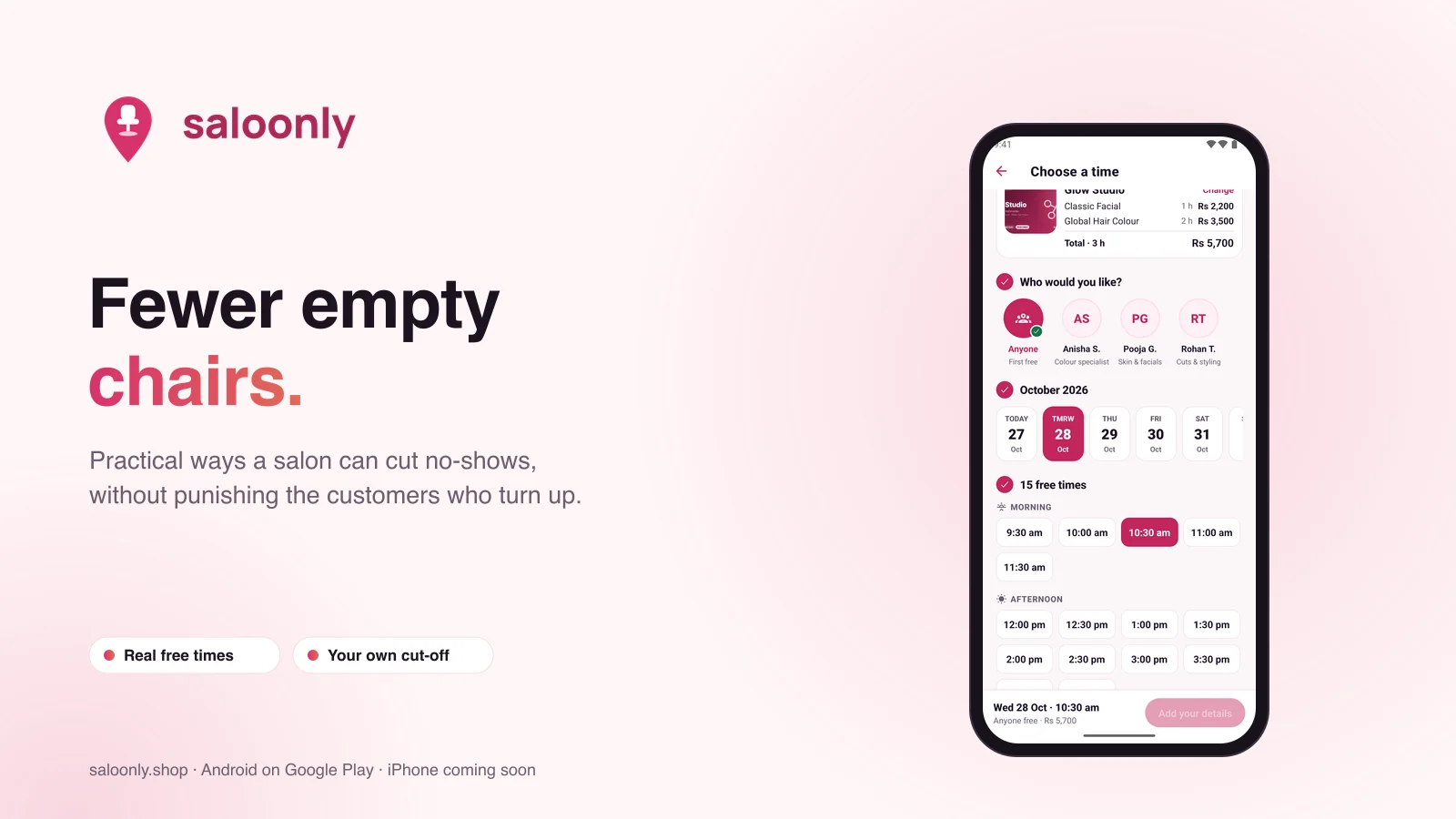
A surprising number of no-shows start with a confusing booking: a time confirmed over the phone that was never written down, or a slot two people both thought was theirs. When people book themselves, show only times worked out from your real hours, your team and the bookings you already have. On Saloonly, that is how times are worked out, and if a time goes while someone is deciding, they are told and shown what is free instead.
2. Make cancelling easy
It sounds backwards, but it works. A customer who cannot be bothered to call and cancel simply does not come. A customer who can cancel in two taps gives you the time back. On Saloonly, customers cancel from My bookings in the website or Me in the app.
3. Set a clear cancellation cut-off
Decide how close to the time a booking can still be cancelled online, say it plainly, and stick to it. After the cut-off, customers call you, so you know about the gap and can fill it. Saloonly lets each salon set its own cut-off.
4. Confirm the day before, personally
A short message or call the day before, from the salon, catches most of the people who forgot. Keep it friendly and make replying easy: "See you tomorrow at 2:30. If you can't make it, just reply and we'll move you." Long-standing regulars rarely need it; first-time customers usually do.
5. Take a name and a working number
You cannot remind someone you cannot reach. For bookings made ahead, a name and mobile number are enough. Saloonly asks for exactly that, and nothing more, so the customer is reachable without a sign-up getting in the way. Walk-ins are different: a walk-in should not need to give anything before they sit down.
6. Keep a short walk-in list on busy days
On a Saturday, a no-show is only a loss if nobody fills the chair. Keep the names of walk-ins who were happy to wait, and call the first one in when a booked time goes quiet. A live view of who is waiting, who is in the chair and what is unpaid, like SaloonERP's Live Studio, makes this easy at the counter.
7. Know who your no-shows are
Most no-shows come from a small number of people. When every booking is part of a customer record, you can see who has missed before and treat their next booking accordingly, for example by confirming it personally. In SaloonERP, everyone who books through Saloonly also becomes a customer record, just like a phone booking.
8. Do not let the booking channel make it worse
Some booking channels charge the salon whether the customer turns up or not. Saloonly does not: its commission applies only to completed bookings and collected orders it brings you, and no-shows and cancellations cost you nothing.
| Step | What it fixes |
|---|---|
| Real free times only | Double-bookings and confused confirmations |
| Easy cancelling | Silent no-shows from people who would have cancelled |
| A clear cut-off | Late gaps you hear about too late to fill |
| A personal confirmation | People who simply forgot |
| Name and number | Bookings you cannot follow up |
| A walk-in list | Chairs that stay empty after a no-show |
| Customer history | Repeat no-shows |
| A fair channel | Paying for visits that never happened |
Keep reading: How to get your salon found online without ads · Saloonly for salon owners: a practical guide · How booking on Saloonly works, step by step
Saloonly is a booking marketplace from SaloonERP, built by Lacspace. Details as they stood on 28 October 2026: the website and the Android app on Google Play are live, and the iPhone app is coming soon. Which salons you can book depends on who has joined near you. Features and details can change.
Frequently asked questions
What is a good cancellation cut-off for a salon?
It depends on the service. A short cut can be refilled quickly; a long colour or treatment needs more notice. Pick a cut-off you can actually refill within, say it clearly, and apply it the same way to everyone.
Should a salon take deposits to stop no-shows?
Some salons do for long services. It reduces no-shows but adds friction for everyone else. Many salons get most of the benefit from easy cancelling, a clear cut-off and a personal confirmation the day before.
Does Saloonly charge the salon for no-shows?
No. Saloonly earns a commission only on completed bookings and collected orders it brings. No-shows and cancellations cost the salon nothing.
Can customers cancel a Saloonly booking themselves?
Yes, from My bookings on the website or Me in the app, up to the cut-off the salon sets. After that, they call the salon.