
E-commerce development for stores and marketplaces that sell.
Selling online looks simple from the outside: a catalogue, a cart, a checkout. Underneath, it is payments that must never double-charge, stock that must match the shelf, delivery that must be tracked, and returns that must not get lost. Most store problems show up there, after launch.
How we approach it
Lacspace has built a multi-vendor beauty and jewellery marketplace, a B2B wholesale store with trade pricing, and online ordering for a multi-outlet food brand. We build stores on our own stack when you need custom flows, and set up a hosted platform when that is the faster, cheaper answer.
Storefronts that convert
Fast product pages, clear filters, search that finds things and a short checkout that works well on a phone.
Payments
Local and international payment gateways, cash on delivery where it applies, and safeguards against double charges.
Multi-vendor marketplaces
Vendor sign-up, product management, order routing, commissions and payouts, with an admin view of the whole marketplace.
B2B ordering
Trade accounts, tiered pricing, bulk and quote orders, and minimum quantities for wholesale buyers.
Stock and fulfilment
Inventory connected to orders, delivery partners and returns, so what the site shows matches what you can ship.
Search visibility
Product structured data, clean URLs and fast pages so your catalogue can be found in search.
How the project runs
- 01
First call
What you sell, to whom, how orders are fulfilled today and where you want to sell next.
- 02
Scope and quote
Hosted platform or custom build, features, integrations, timeline and price, in writing.
- 03
Design
Product, cart and checkout screens designed for your buyers, reviewed before the build.
- 04
Build and connect
Store, payments, delivery and stock connected and tested with real orders end to end.
- 05
Launch and grow
Go-live with a checklist, then conversion fixes, new features and upkeep under a support plan.
The technology, in plain words
Custom stores are built with Next.js and React on the front and a TypeScript API with a managed database behind it. Pages render on the server for speed and search, and checkout steps are designed so a payment can be retried safely without charging twice.
When your catalogue and process are standard, a hosted platform can be the right call, and we will say so. When you need marketplace logic, B2B pricing or a tight link to an ERP, a custom build gives you control without per-sale platform limits.
Who it is for
- Retail brands starting to sell online or outgrowing a basic store
- Wholesalers that want buyers to order without phone calls
- Founders launching a multi-vendor marketplace
- Food and retail chains taking orders across many outlets
- Businesses whose store and stock systems do not talk to each other
Related client work
Case studies from projects we built, written from what was actually delivered.
 Commerce & retailColour NepalA full-scale e-commerce marketplace platform built to empower jewellery and beauty vendors across Nepal, combining cultural elegance with modern shopping, secure payments, and nationwide delivery.Read the case study
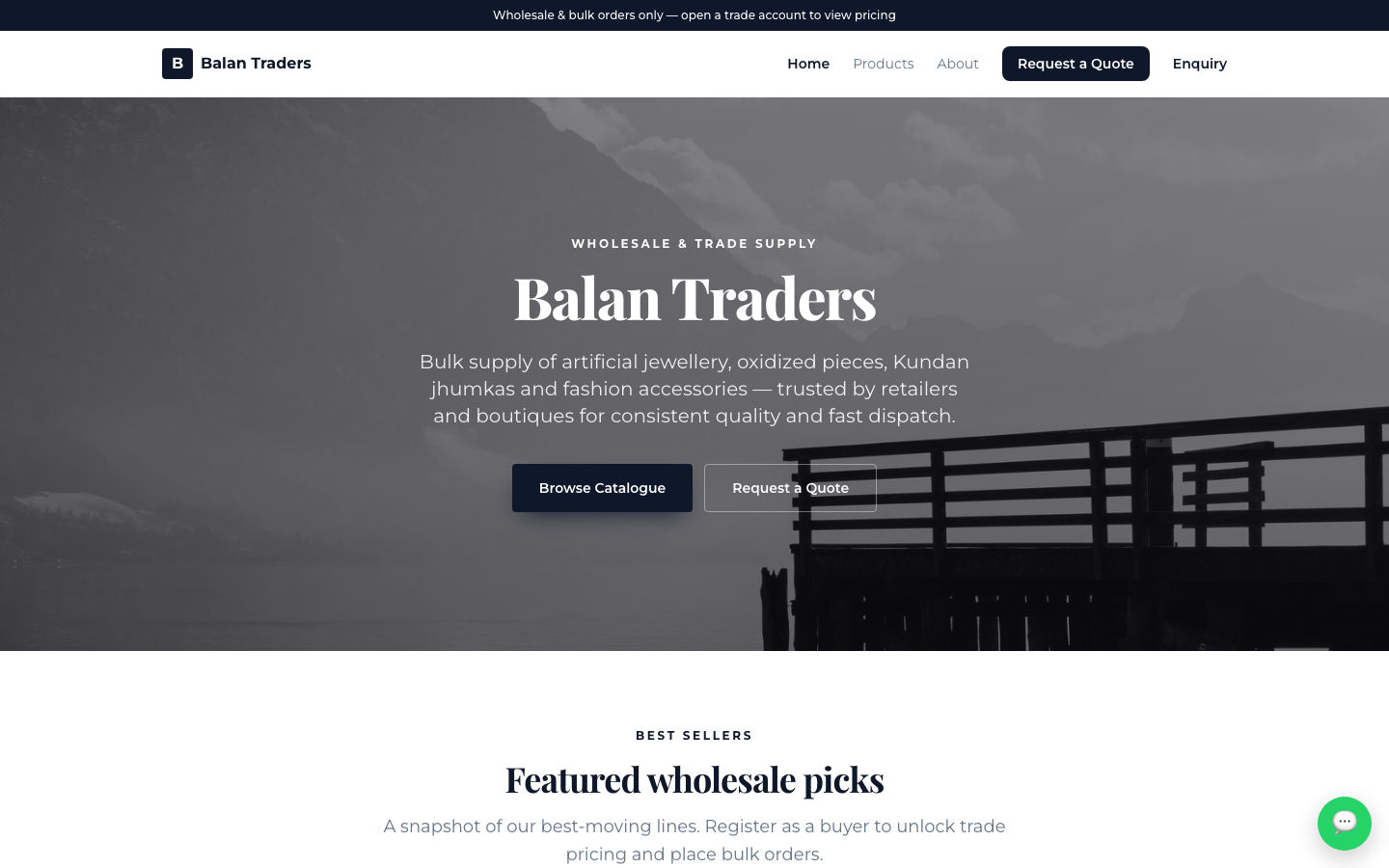 Commerce & retailBalan TradersLacspace built Balan Traders end-to-end — a B2B wholesale artificial-jewellery storefront and ERP with trade accounts, tiered pricing, a 900+ SKU catalogue and bulk order management.Read the case study
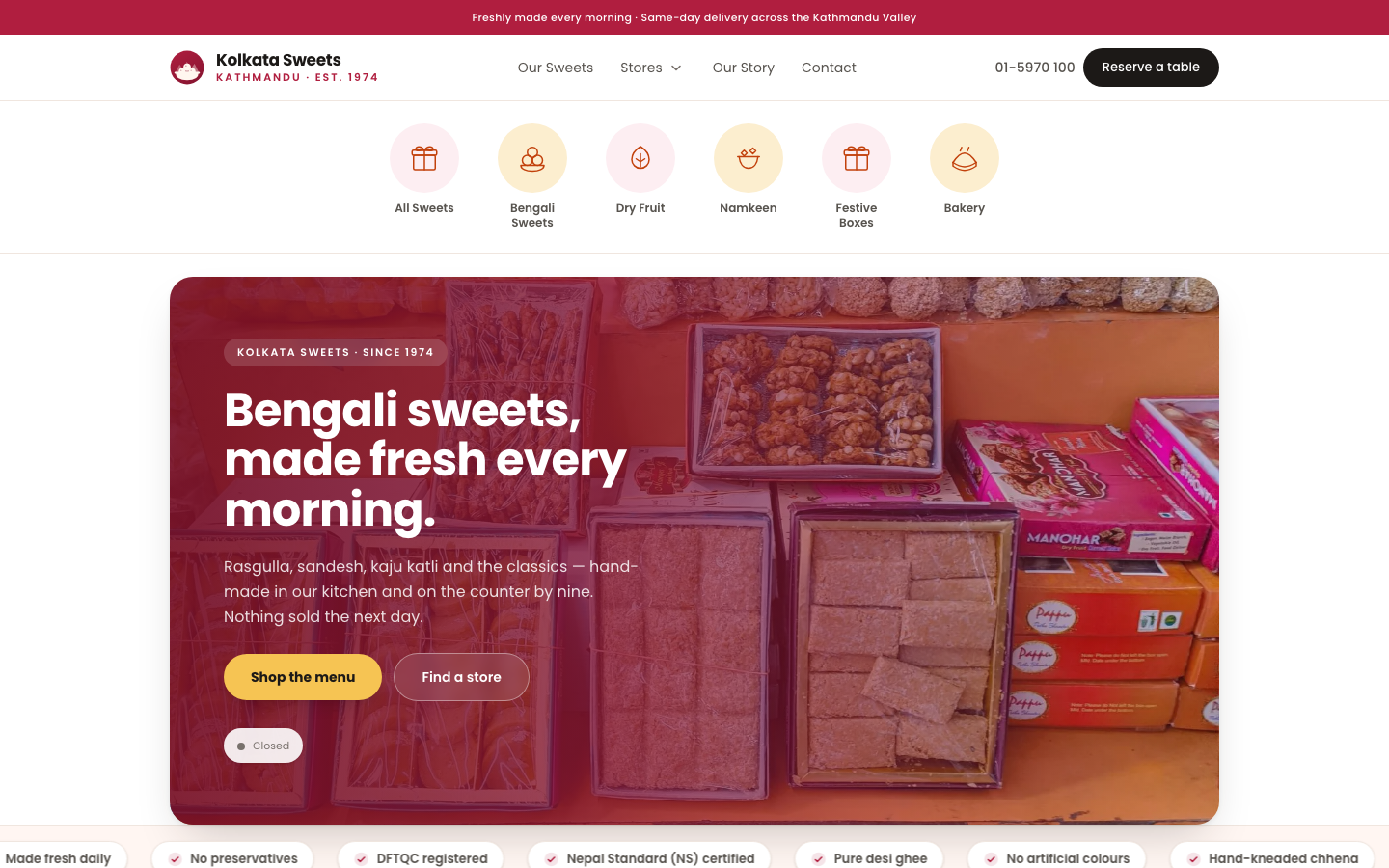 Commerce & retailKolkata SweetsLacspace built Kolkata Sweets' full tech stack — a website and multi-outlet retail ERP for a 1974-founded Bengali sweets brand with a central kitchen and 12 counters across the Kathmandu Valley.Read the case study
Also in products we build and run
Questions buyers ask
Should I use a hosted store platform or a custom build?
If you sell a standard catalogue to consumers, a hosted platform is often quicker and cheaper, and we can set it up. Choose a custom build for multi-vendor marketplaces, B2B pricing, unusual checkout rules or a close link to your own ERP.
Can you build a multi-vendor marketplace?
Yes. Vendor onboarding, product management, order routing, commissions, payouts and an admin console are all part of a marketplace build. Colour Nepal is one marketplace we built.
Which payment methods can you integrate?
We integrate the payment gateways your customers use, local and international, plus cash on delivery where it applies. Payments are designed to be retried safely without double charges.
Can the store connect to my inventory or ERP?
Yes. Stock, prices and orders can sync with your inventory system or an ERP we build, so the website never sells what you do not have.
Will my products show up in search?
Product pages are built with structured data, unique titles and descriptions, clean URLs and fast loading, which gives each product the best chance to be listed.
Related reading
Related services
- Website developmentBusiness websites designed, built and hosted with search, speed and accessibility built in, plus enquiry forms that reach your team, and easy to update.
- ERP and CRM software developmentCustom ERP and CRM software for orders, stock, branches, staff and cash: one system built around your workflow, with web and mobile access and clear reports.
- UI/UX designUI/UX design for web and mobile products: research, wireframes, clickable prototypes, usability checks and design systems your developers can build from.
- Every service we offer
Tell us what you need built.
Start with a call. You get a written scope and price before anything is agreed.