Most of what Lacspace builds is serious software: business tools, platforms, infrastructure. Lacspace Game Studio is the part of the company that builds something lighter, games. The work is lighter, but the standard isn't. A game shows sloppy software faster than anything else. If a frame drops, a tap lags or a sound clips, players feel it at once and stop playing.
This article covers what the studio has made, how a game goes from idea to update, and the rules we hold every game to.
What the studio has shipped
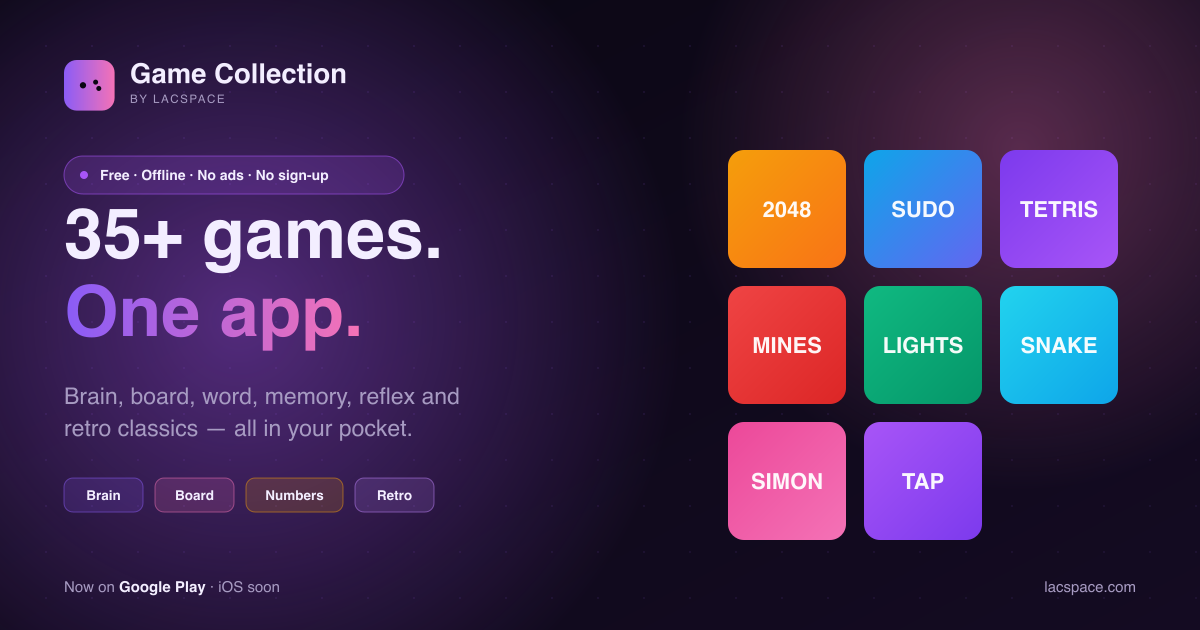
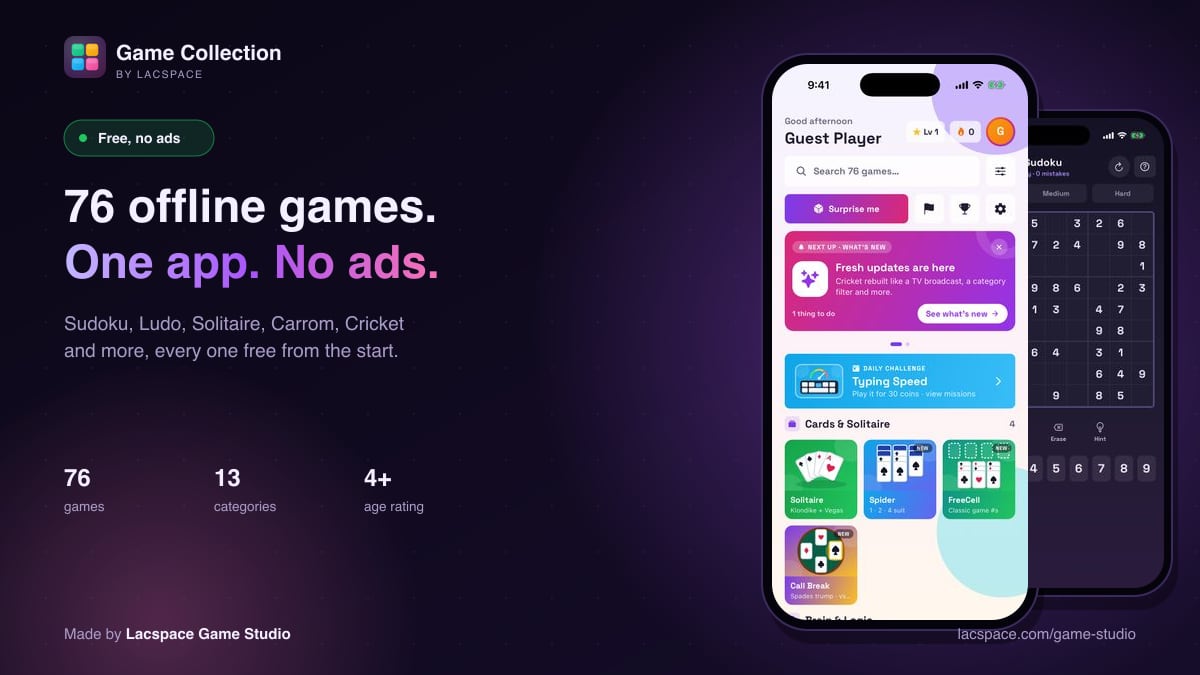
Our first app is Game Collection, which is live on the App Store and Google Play. It holds 76 games in 13 categories, from a two-minute Sudoku to a full Ludo match with friends online. Everything in it is free. There are no ads and no in-app purchases, and you don't need an account to play.
| Game Collection today | |
|---|---|
| Games | 76, in 13 categories |
| Platforms | iPhone and iPad (iOS 16.4 or later), Android |
| Price | Free: no ads, no in-app purchases, no paywalls |
| Internet | Not needed to play; online Ludo, leaderboards and cloud save use it |
| Computer opponent | Lumi AI, with difficulty levels where the game allows |
| Age rating | 4+ |
Recent updates show where our effort goes:
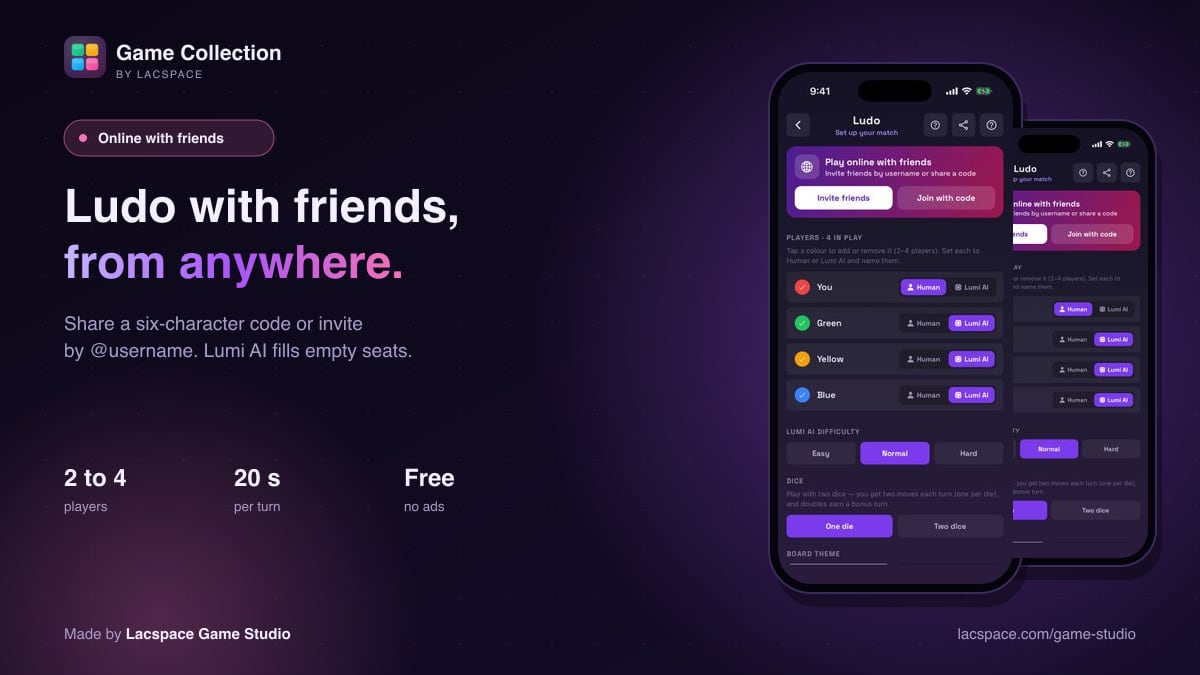
- Ludo you can play online with friends.
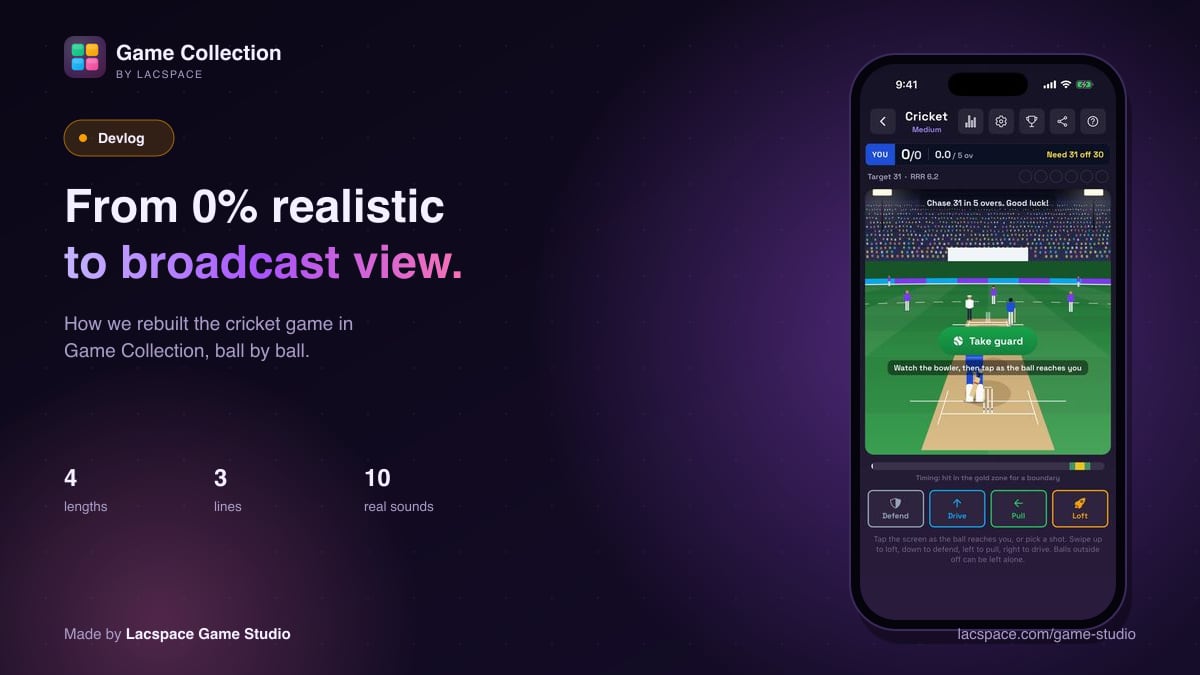
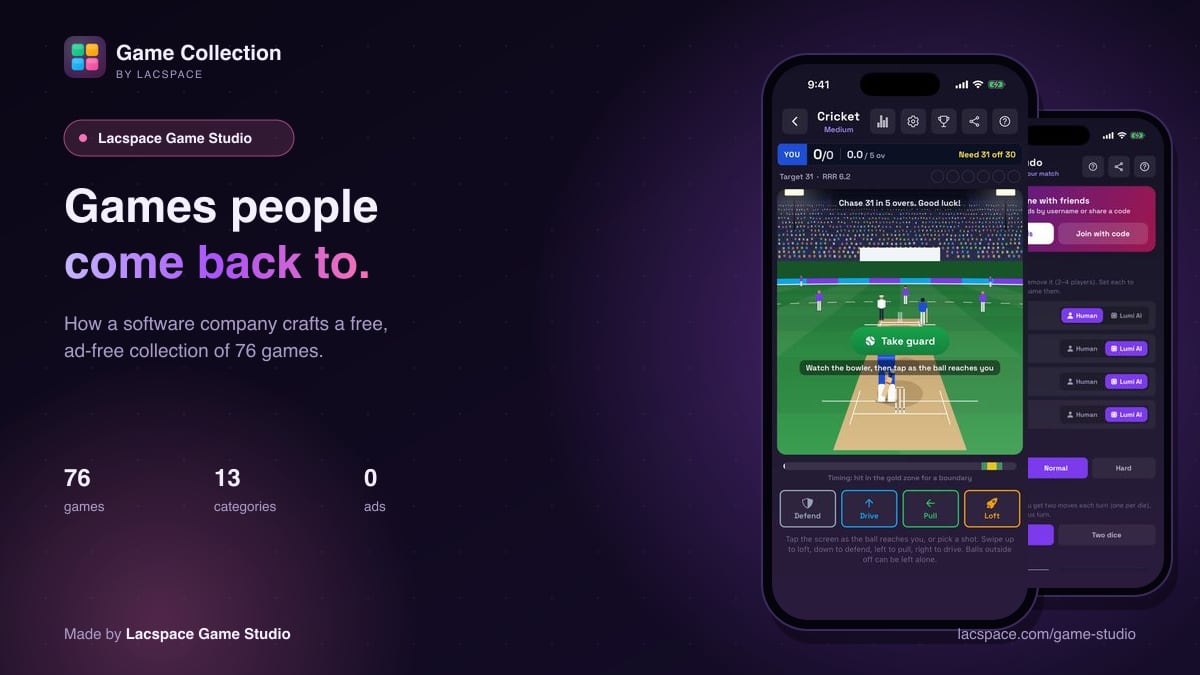
- A rebuilt Cricket game with a TV-style camera and a recorded crowd (the story of that rebuild).
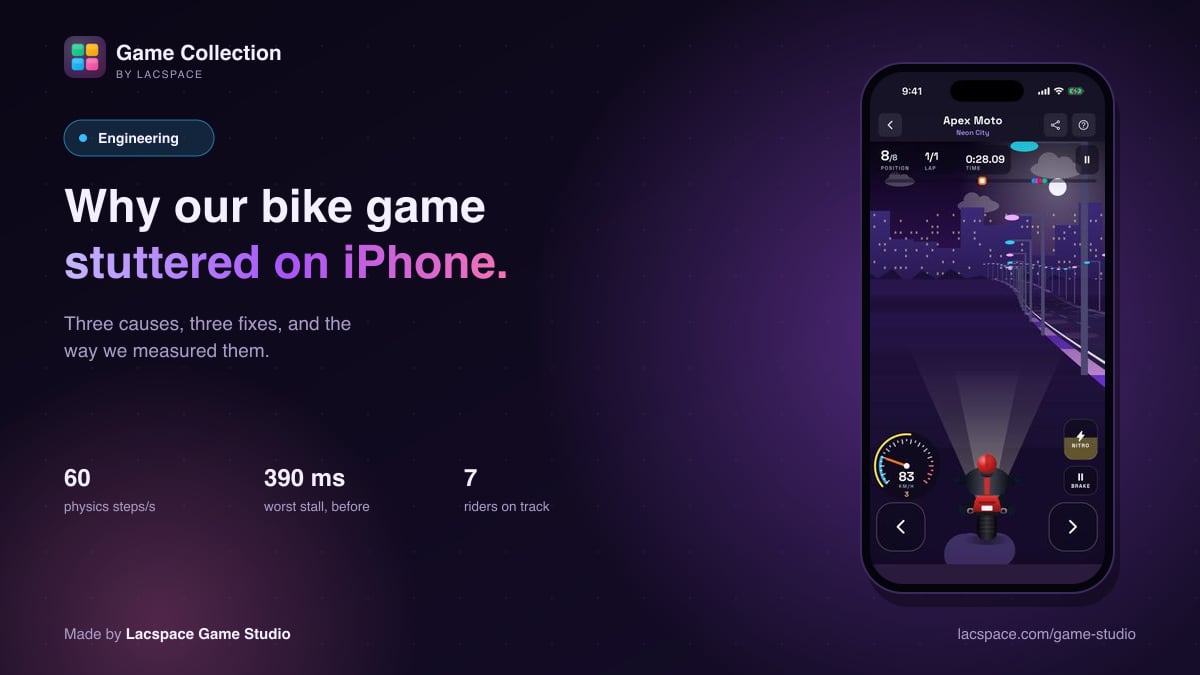
- A motorbike racer, Apex Moto, that we made run smoothly on 120 Hz screens (how we fixed the stutter).
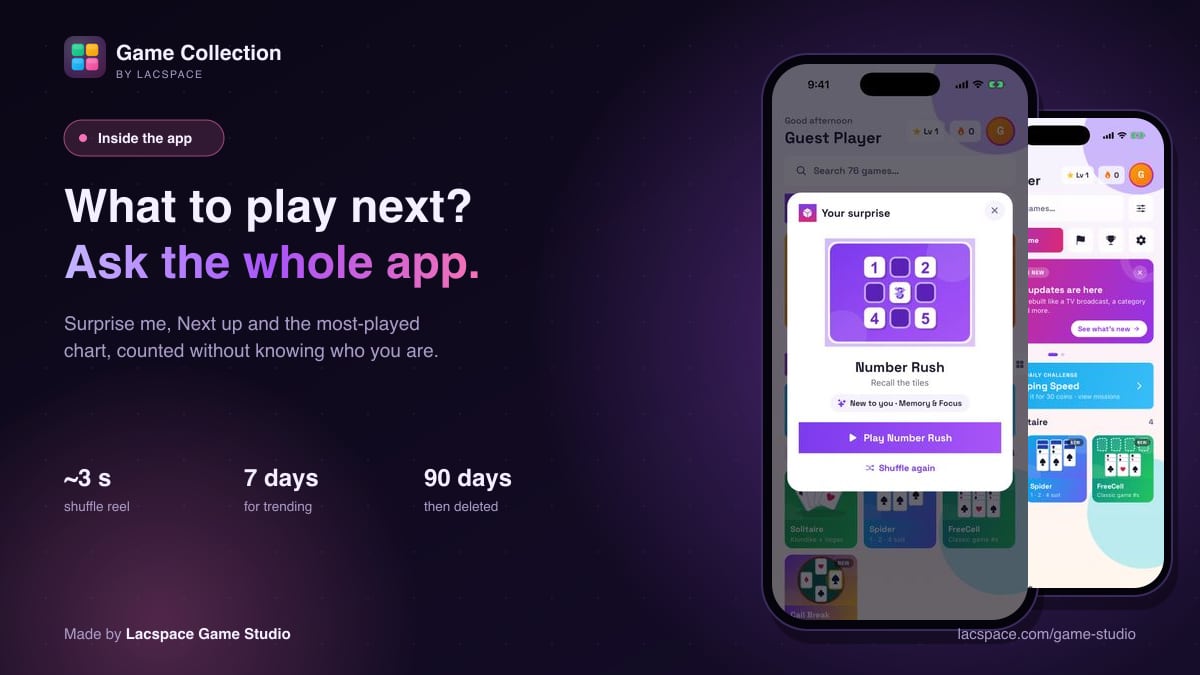
- A Surprise me button that shuffles through the collection and picks your next game (how it chooses).
How a game gets made here
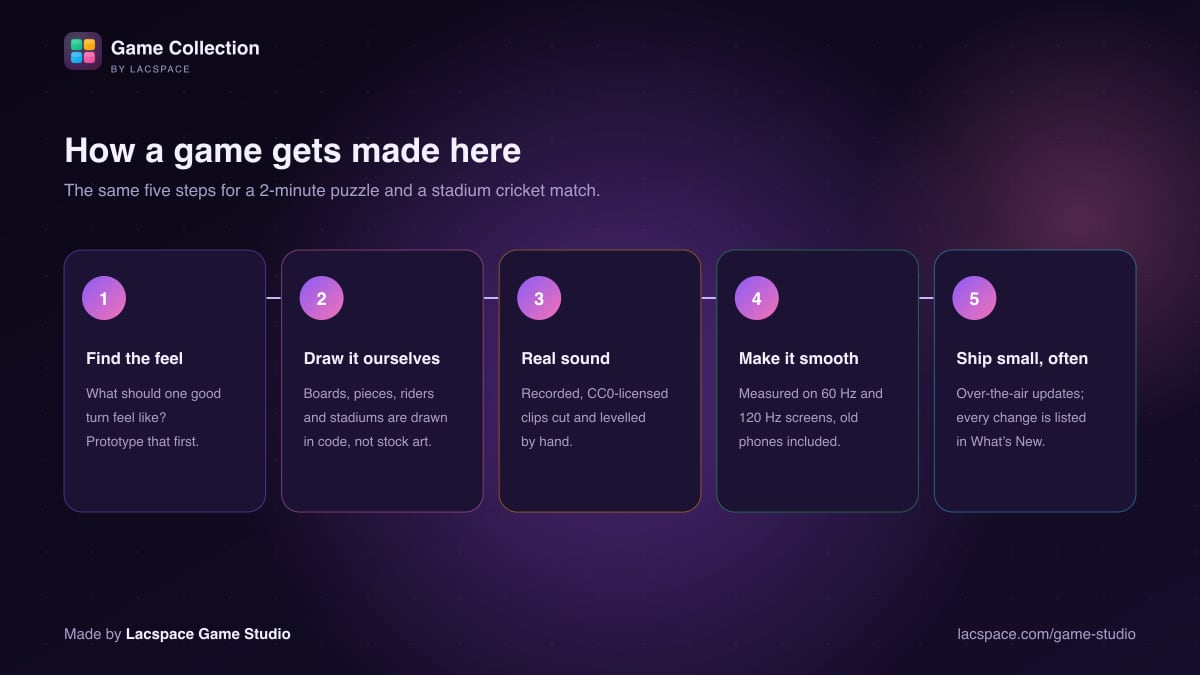
1. Find the feel first
Before a menu, a score or a settings screen exists, we ask one question: what should one good turn feel like? In Carrom it is the flick and the clack of the striker. In Ludo it is the dice landing and the piece hopping home. We prototype that moment first. If the moment doesn't work, nothing around it will save the game.
2. Draw it ourselves
Boards, cards, pawns, riders, stadiums and crowds are drawn in code, not taken from stock art packs. That keeps the collection consistent and the app small, and every piece stays sharp on any screen. The cricket stadium, for example, is a real 3D projection measured in metres. Its fielders stand where fielders actually stand.
3. Use real sound
Synth beeps are fine for a prototype, but players can hear the difference. Where a game needs a real sound, such as bat on ball, stumps breaking or a crowd roar, we use recorded clips released under the CC0 public-domain licence. We cut and level each clip by hand so nothing jumps out.
4. Make it smooth everywhere
We test on 60 Hz and 120 Hz screens, and on older phones as well as new ones. When something stutters, we measure it with a frame logger instead of guessing.
5. Ship small, and often
Most improvements reach players as small over-the-air updates. Every change is listed in the app's What's New screen, so players can see what changed and why.
What we will and won't do
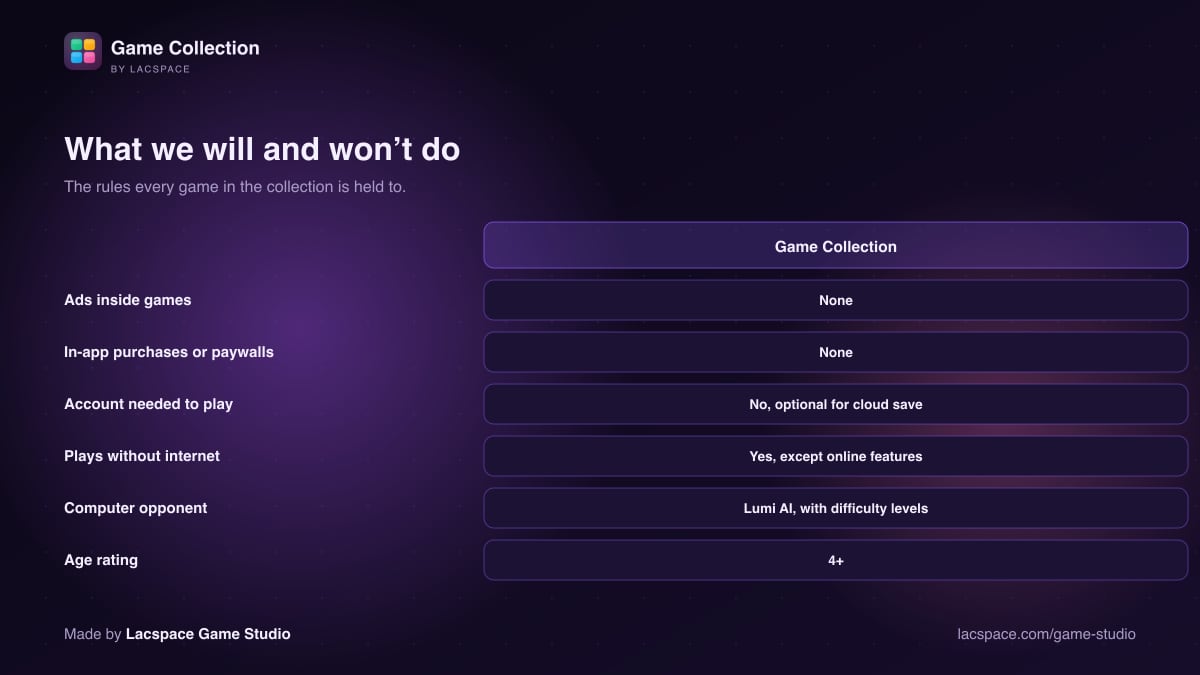
- No ads, no pay-to-win. Coins and XP in the app are earned by playing. They cannot be bought.
- Privacy by default. You can play without an account. If you choose cloud save, you sign in with a one-time email code, so there is no password to leak. The app-wide "most played" chart is built from anonymous counts (here is exactly how).
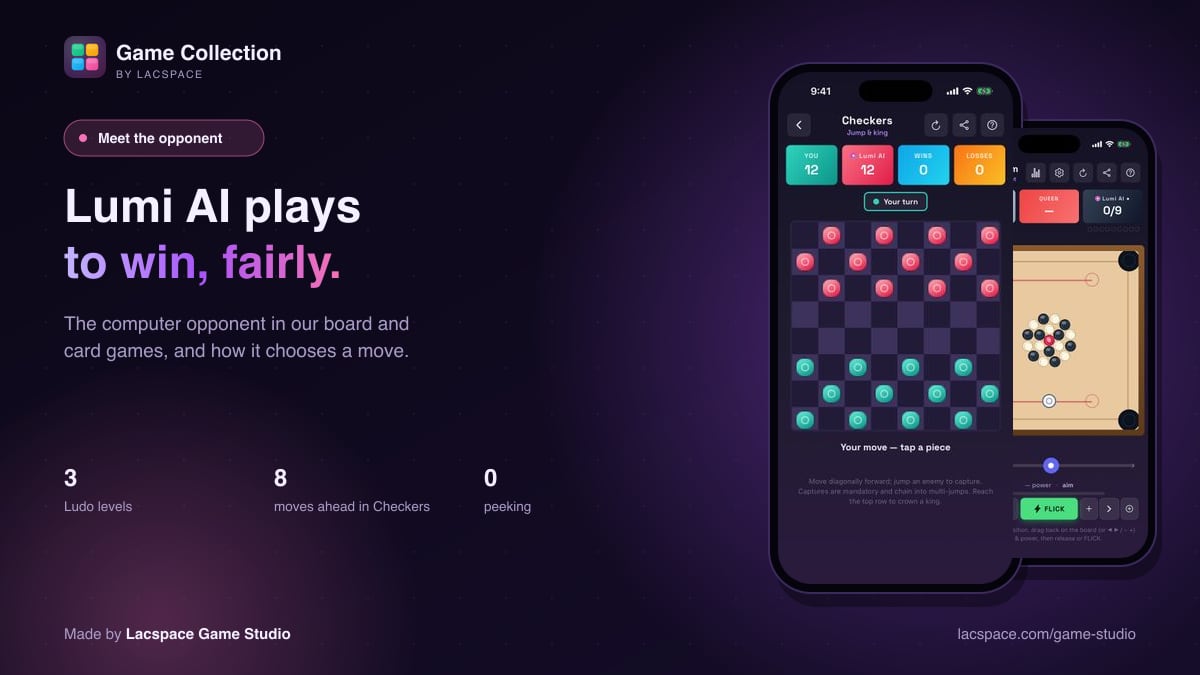
- A fair opponent. Our computer opponent is called Lumi AI. It plays from the same information you have. In Call Break it never sees your cards, and in Ludo it uses the same dice rules you do (how Lumi AI thinks).
- Respect for your time. Every game opens straight into play. There are no timers to wait out and no energy bars.
Where the studio is going
The direction is simple. We'll keep adding games with each update, give players more ways to play together, make Lumi AI a better opponent at every level, and build more games that are our own ideas from the ground up. This is a direction, not a release schedule. You can follow it on the Lacspace Game Studio page and in the app's What's New screen.
Keep reading: 76 free offline games with no ads · How we rebuilt Cricket for a phone · Meet Lumi AI, our game opponent · How the app picks your next game
Game Collection is made by Lacspace Game Studio. This article describes the app as of 3 November 2026; games and features change with updates. Game Collection is free, with no ads and no in-app purchases.
Frequently asked questions
What is Lacspace Game Studio?
Lacspace Game Studio is the games team inside Lacspace. It makes Game Collection, a free app with 76 games in 13 categories for iPhone, iPad and Android.
Are Lacspace games free?
Yes. Game Collection is free to download and play, with no ads, no in-app purchases and no paywalls. Coins and XP are earned by playing and cannot be bought.
Do I need an account to play?
No. Every game can be played without an account. An optional account, verified with a one-time email code, adds cloud save, leaderboards, friends and online Ludo.
What is Lumi AI in Lacspace games?
Lumi AI is the computer opponent in Game Collection’s board and card games, such as Ludo, Checkers, Carrom and Call Break. It plays from the same information a human player has and offers difficulty levels where the game allows.
Where do the sounds in Game Collection come from?
Where a game needs a real sound, the studio uses recorded clips released under the CC0 public-domain licence, trimmed and levelled by hand. Simpler interface sounds are generated in the app.
Will Lacspace make more games?
Yes. The studio adds games with app updates and plans more ways to play together and more original games. It shares this as a direction, not a dated schedule.