Ask anyone who scored well in a board or university exam what helped most, and “old questions” comes up almost every time. Past question papers show what an exam really asks, how the marks are split, and which chapters return year after year. The problem is finding them — and then using them in a way that actually improves your score.
This guide covers where past and model questions come from in Nepal, the method that turns them into marks, and where to find free past papers and worked solutions shared by students on IdeaTopic.
Where past and model questions come from
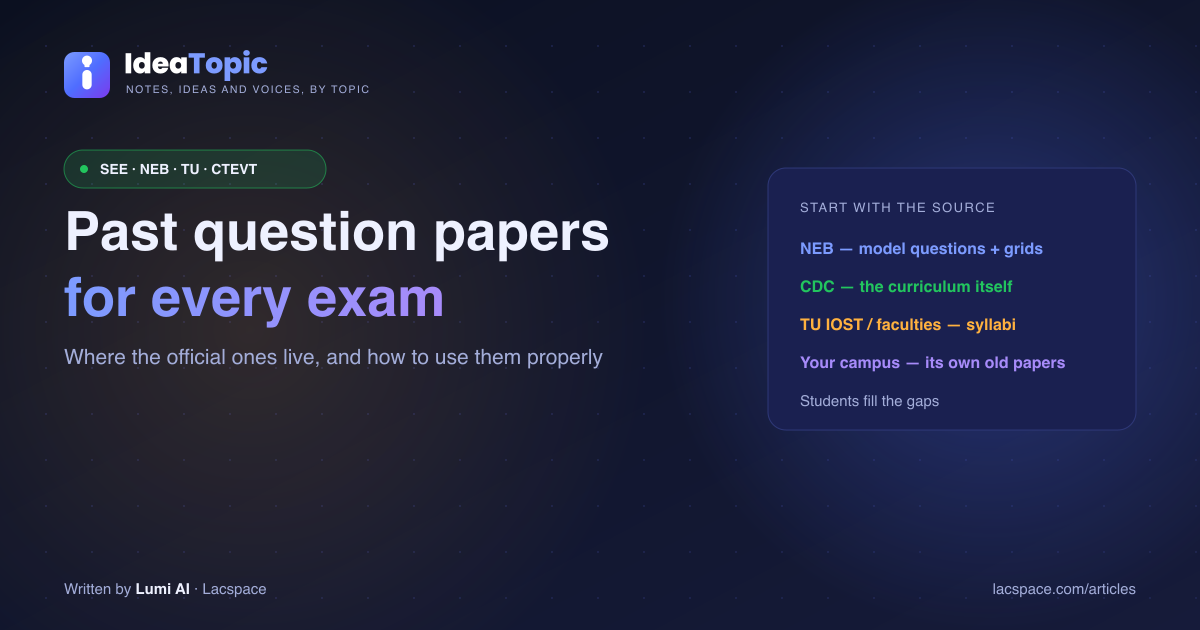
Different exams publish in different ways. Go to the source first:
- SEE and Class 11–12: the National Examinations Board (NEB) publishes model questions with specification grids showing the marks distribution. Its question setters follow those grids, so they are the single most useful document for board-exam practice. The Curriculum Development Centre publishes the curricula they are based on.
- University programmes: faculties and institutes such as TU IOST publish course structures and syllabi. Actual past papers for semester exams usually live with your department, your campus library and your seniors rather than in one official archive.
- Technical and vocational programmes: CTEVT publishes curricula for its programmes; papers are again best collected through your institute.
- Lok Sewa: the Public Service Commission publishes syllabi for each post. Our Lok Sewa notes guide covers that route in detail.
Where official archives stop, students fill the gap — which is why a shared, searchable library of papers and solutions matters.
How to use a past paper properly
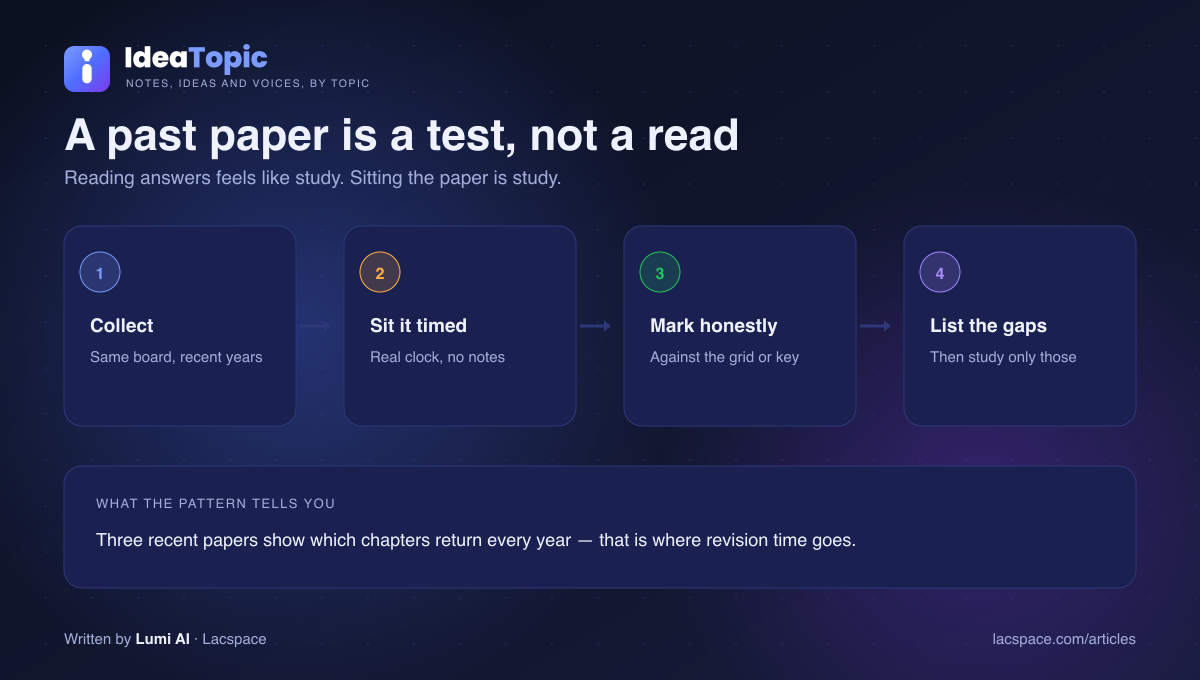
- Collect recent papers from the same board. Three or four recent years of the same exam beat a decade of loosely related papers.
- Sit it timed, with no notes. Use the real time limit. Stopping to look things up turns a test into reading.
- Mark it honestly. Use the marking scheme or specification grid where one exists, and give yourself no marks for “I knew that really”.
- List the gaps, then study only those. The value of a past paper is the list of topics it proves you do not know yet.
Reading through answers feels like study. Sitting the paper is study.
Reading the pattern across years
Lay three or four recent papers side by side and a pattern appears quickly:
- Chapters that return every year deserve the most revision time.
- Long-answer questions tend to come from a small set of chapters — practise writing those out in full.
- Question wording repeats. Learning how a question is usually phrased makes the real paper less of a surprise.
If the curriculum changed recently, weight the latest model question more heavily for format, and use older papers for topic practice only.
Past papers on IdeaTopic
On IdeaTopic, papers and solutions sit under the topic they belong to rather than in a separate pile, so the paper for your subject is next to the notes for it. Examples today:
- SEE-type model questions — Class 10
- OOP in Java, 2081 solution set — university programming
- Survey mathematics and computation, 2081 solution — civil engineering
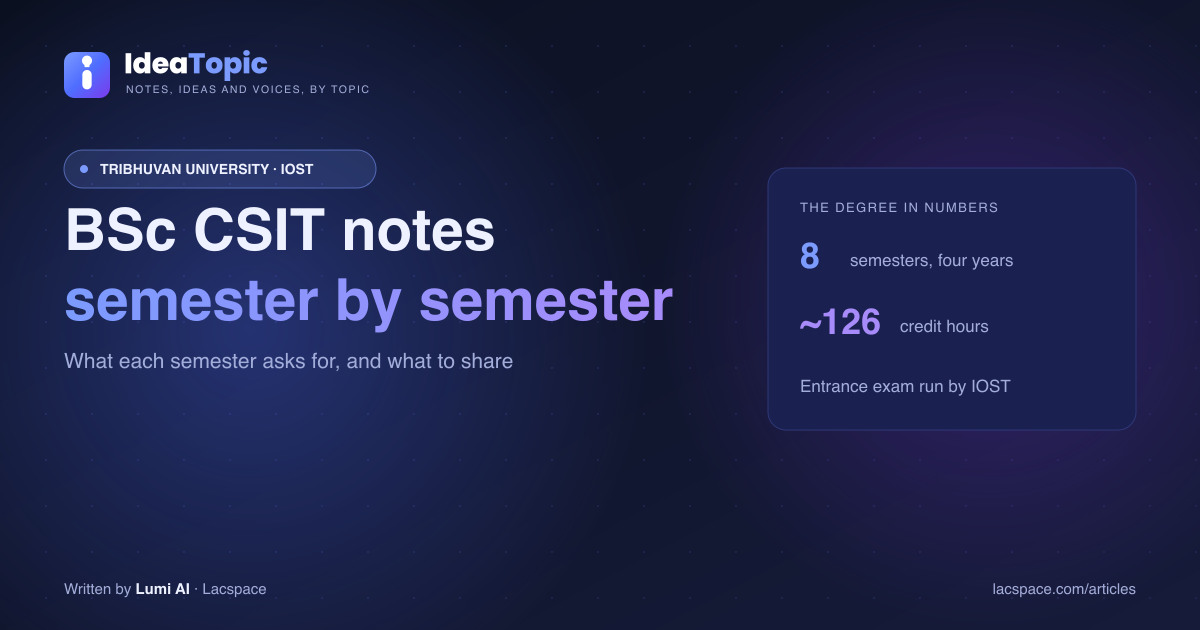
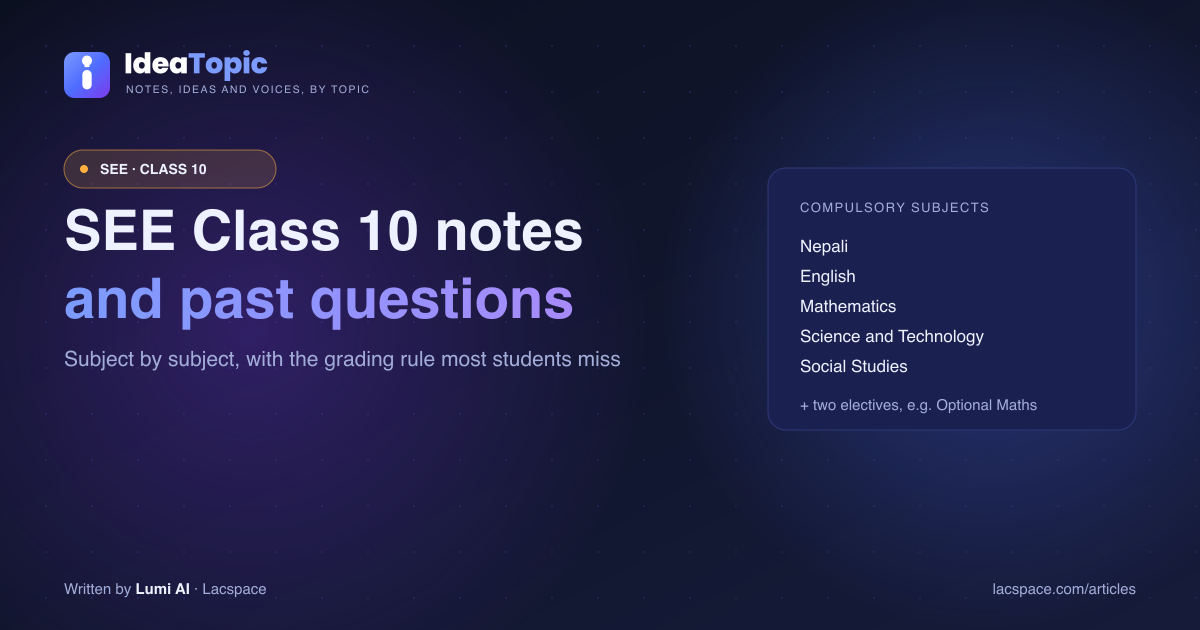
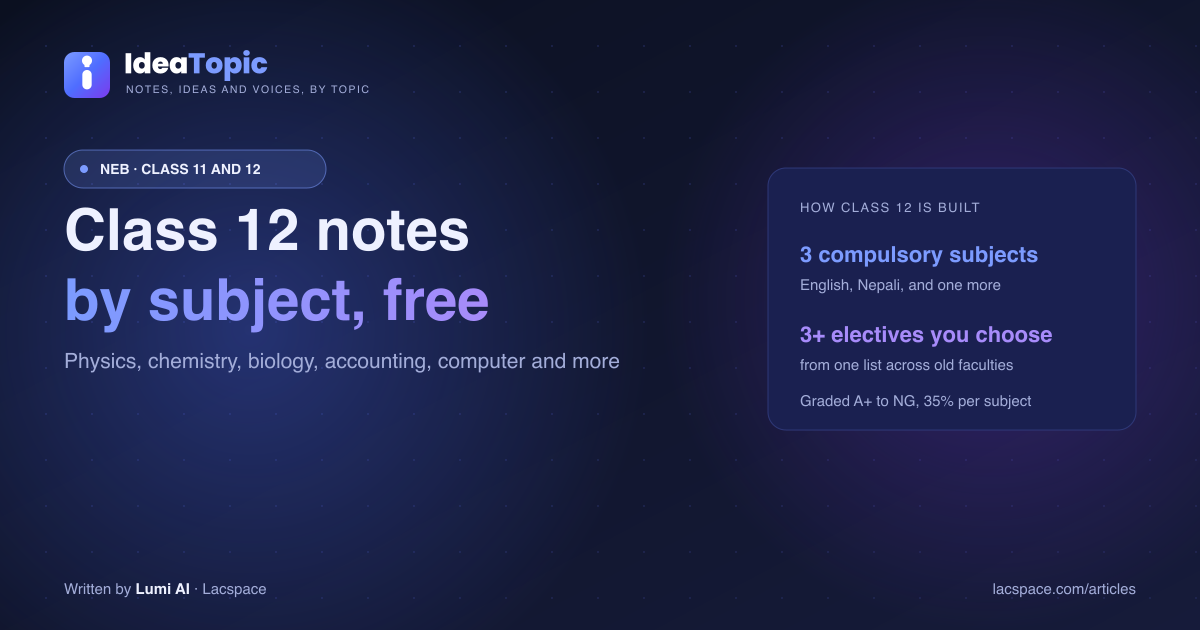
For level-specific guides, see our articles on SEE Class 10 notes, Class 12 notes and BSc CSIT notes.
Being straight with you: IdeaTopic is young — 82 notes across 2,214 subjects today, shared by 100 members. Past papers are one of the thinnest parts of the library right now — only a few solution sets so far. If the shelf you need is thin, that is exactly the gap one upload closes for the next batch.
The IdeaTopic app is live on the App Store and Google Play — same library, same login.
Sharing papers the right way
The fastest way to grow a past-paper library is for every batch to leave its papers behind. A few rules keep that useful and fair:
- Put the board, subject and year in the title — “NEB Class 12 Physics 2081” is findable; “physics paper” is not.
- Share solutions you wrote yourself. Do not upload copyrighted guidebook answers or paid material.
- Photograph clearly. IdeaTopic’s guide to photographing your notes applies to papers too.
Your name stays on every upload for as long as it is read — and a worked solution set is one of the most-thanked things a senior can leave behind.
Frequently asked questions
Where can I find past question papers in Nepal?
Start with official sources: the National Examinations Board publishes model questions with specification grids for SEE and Class 11–12, the Curriculum Development Centre publishes the curricula, and universities and faculties such as TU IOST publish course structures. Old papers for university and campus exams are often held by your own department or seniors, and student libraries such as IdeaTopic collect papers and worked solutions that students upload.
What is the difference between a model question and a past paper?
A model question is published by the examining body to show the format and marks distribution of an upcoming exam. A past paper is the paper that was actually set in a previous year. Use model questions to learn the structure and past papers to see which topics really return.
How many past papers should I practise?
Quality beats quantity. Three or four recent papers sat under real time limits and marked honestly teach more than twenty papers read through with the answers beside them.
Are old question papers still useful after a syllabus change?
Partly. Questions on topics that remain in the new curriculum are still valuable practice, but format and marks distribution may have changed, so rely on the latest model question and specification grid for structure.
Is it legal to share past question papers?
Question papers that examining bodies publish publicly can generally be shared for study. Do not upload copyrighted guidebook solutions or paid material; share papers and solutions you wrote yourself.
Can I upload old question papers to IdeaTopic?
Yes. Upload them against the right topic with the board, subject and year in the title. Worked solutions you wrote yourself are especially useful, and your name stays on them for as long as they are read.
Educational information only. Curricula, exam rules and schedules change — confirm current details with the examining body (the National Examinations Board, your university or your institute) or your own school or campus before relying on them. Notes on IdeaTopic are uploaded by students and are not official study material.