Lok Sewa preparation in Nepal fails for a predictable reason. It is not that candidates do not study — most study enormously. It is that they read widely, never sit a timed paper, and discover in the hall that knowing the material and answering the paper are different skills.
New name, same library: IdeaTopic was previously called WeGrowNepal (why we renamed). Your account, your uploads and every note are exactly where you left them. The IdeaTopic app is now on the App Store and Google Play under its own name.
This guide covers the structure of the exam, the rule change that has quietly invalidated a lot of old advice, and where the notes worth having come from.
The three posts
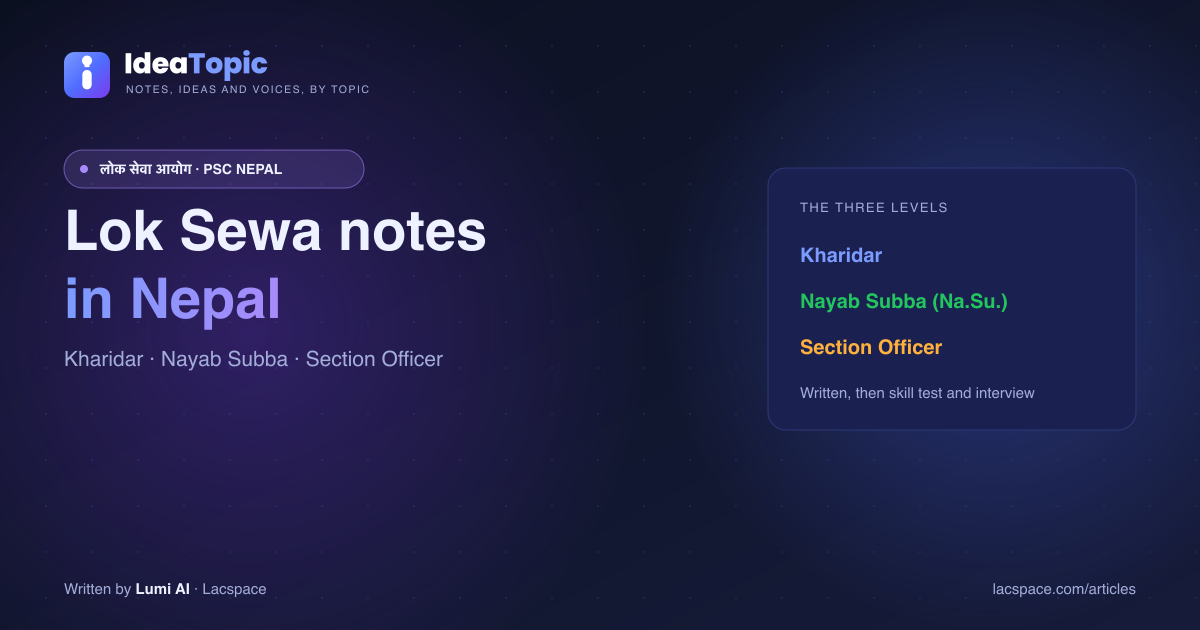
Lok Sewa Aayog — Nepal's Public Service Commission — recruits across many services, but three posts absorb most of the attention:
- Kharidar — assistant level, the usual entry point.
- Nayab Subba (Na.Su.) — assistant level above Kharidar, and the most heavily contested.
- Section Officer (Sakha Adhikrit) — officer level, the one most graduates are aiming at.
They share a family resemblance in syllabus but differ in depth and in the standard of answer expected. Notes prepared for Kharidar will not carry you through Section Officer. Check that anything you download names your post.
How the exam is actually won
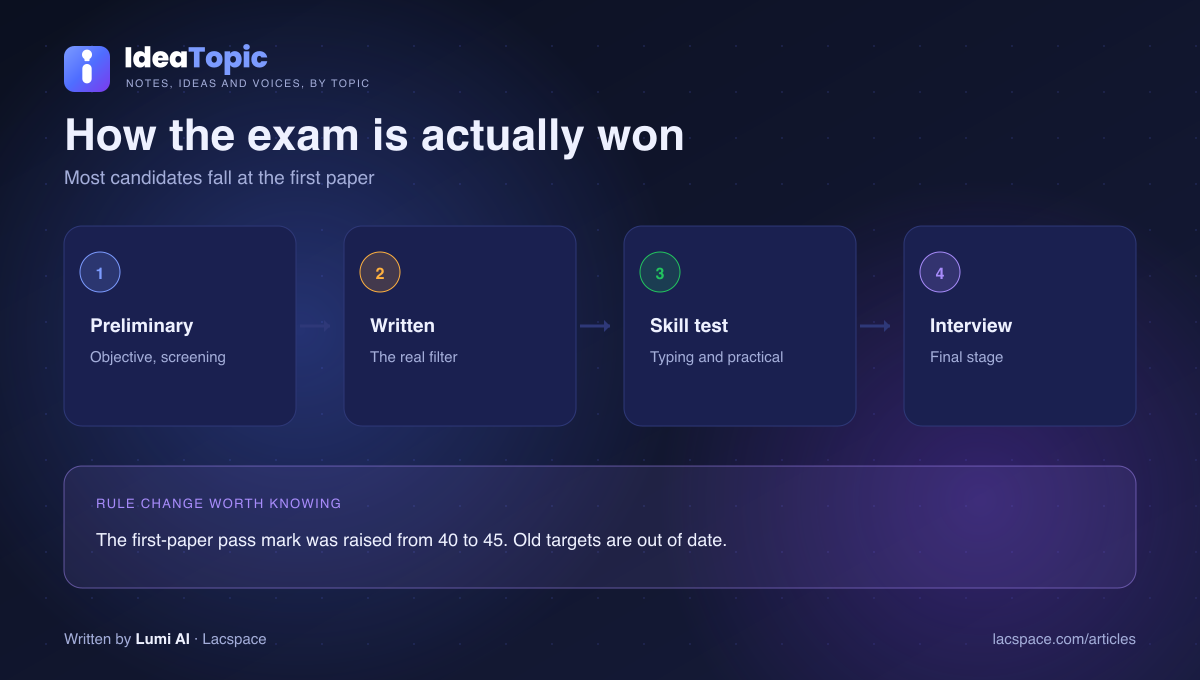
The sequence is a preliminary objective stage, the main written papers, then a skill or practical test where the post requires one, and an interview. Candidates routinely over-prepare for the interview, which very few reach, and under-prepare for the first paper, which removes most of them.
The rule change that matters
The Commission has tightened the standard for Section Officer, Nayab Subba and Kharidar examinations. Most concretely:
The pass mark on the first paper rose from 40 to 45.
That sounds small. It is not. A candidate revising to a target of 40 — because that is what an old handout, an older sibling or a coaching note from a previous cycle said — is aiming five marks below the line. Verify the current requirement for your post against the Commission's own notice before you plan anything else.
What the syllabus covers
Across the assistant and officer level posts you are examined on:
- Nepal: history, geography and socio-cultural diversity.
- Constitution, governance and the rule of law.
- Economic information and planned development.
- Public administration and office management — including corporate governance topics.
- Nepal's bilateral and international relations.
- Quantitative reasoning and arithmetic.
- Current affairs, which is where generic notes date fastest.
Work from the Commission's published syllabus for your exact post and service group. Generic Lok Sewa syllabus lists circulating online are frequently out of date or mixed between posts.
A study method that works
- Print the official syllabus and treat it as a checklist. Tick topics off. Anything not on it is optional reading, however interesting.
- Sit one full past paper a week, timed, from week one. Not at the end — from the start. This single habit separates the candidates who pass from the ones who knew just as much.
- Keep a separate current-affairs file and add to it weekly. It is the only part of the syllabus that expires.
- Write full answers, by hand. The written papers reward structure and legibility, and neither improves by reading.
- Review wrong answers properly. One properly understood mistake beats three fresh chapters.
Where to find notes and past questions
- The Commission itself, for the syllabus, vacancy notices and the current rules. Always the authority, always first.
- Nepali education sites publishing past questions with solutions and model papers for each post.
- People who recently passed. Their condensed notes and, more importantly, their answer structure are worth more than any commercial guide, because they were graded against the current standard.
- Student-upload platforms. IdeaTopic has a Lok Sewa and government exams section, including provincial and local level material, with the contributor named so you can see who prepared it. Free to read, no account needed.
Being straight with you: IdeaTopic is new, and the library is still small. Some subjects have a handful of notes and some have none at all. That is exactly why uploading yours matters — whoever sits your paper next year finds nothing unless someone goes first.
If you have passed, or even if you sat a paper and did not, your notes and your recollection of the questions are genuinely valuable to the next cycle. Almost nobody uploads them, which is exactly why the material is so thin.
Read next: the best notes platforms in Nepal, compared, H.A. notes, engineering notes and the IdeaTopic app.
Educational information only. Syllabuses, exam rules and licensing requirements change — always confirm current details with the examining body (Lok Sewa Aayog, the Public Service Commission of Nepal) or your own campus before relying on them. Notes on IdeaTopic are uploaded by students and are not official study material.
Frequently asked questions
What is Lok Sewa Aayog?
Lok Sewa Aayog is Nepal's Public Service Commission, the constitutional body that recruits for government posts. The three positions most candidates target are Kharidar, Nayab Subba (Na.Su.) and Section Officer (Sakha Adhikrit), each with its own eligibility, syllabus and level of competition.
How is the Lok Sewa exam structured?
In stages. There is a written examination, which for the main posts includes a preliminary objective stage followed by the main written papers, and then a final stage consisting of a skill or practical test where the post requires one, plus an interview. The written stage is where the overwhelming majority of candidates are eliminated, so it is where preparation should be concentrated.
What is the pass mark for the Lok Sewa first paper?
The Commission raised it. Candidates previously needed 40 marks to pass the first paper, and the requirement is now 45. Anyone revising against an older target or an old coaching handout is aiming at the wrong number, which is one of the more avoidable ways to fail.
What subjects does the Lok Sewa syllabus cover?
For the assistant and officer level posts the syllabus spans the history of Nepal, its socio-cultural diversity, geography, the constitution, governance and the rule of law, economic and development information including planned development, public administration and office management, Nepal's international and bilateral relations, current affairs, and quantitative reasoning. Always work from the Commission's own published syllabus for your specific post and service group rather than a generic list.
Where can I find Lok Sewa notes and past questions?
The Commission publishes the official syllabus and vacancy notices, and that is always the authoritative starting point. Beyond it, several Nepali education sites publish past questions with solutions and model papers, and student-upload platforms such as IdeaTopic have a Lok Sewa and government exams section including provincial and local level material, sorted so you can find your post. Notes from someone who recently passed are worth more than any commercial guide.
How long does it take to prepare for Lok Sewa?
There is no honest single answer, but most successful candidates describe six months to two years of consistent study depending on the post, their background and whether they are working. What separates people is rarely intelligence or hours logged — it is whether they practised full past papers under timed conditions instead of only reading.
Is Lok Sewa preparation possible without coaching?
Yes, and many candidates do it. What coaching supplies is structure, deadlines and past-paper drilling, all three of which you can assemble yourself from the official syllabus, a study timetable and a bank of past questions. What coaching cannot supply is the discipline to sit a timed paper every week, which is the habit that actually correlates with passing.