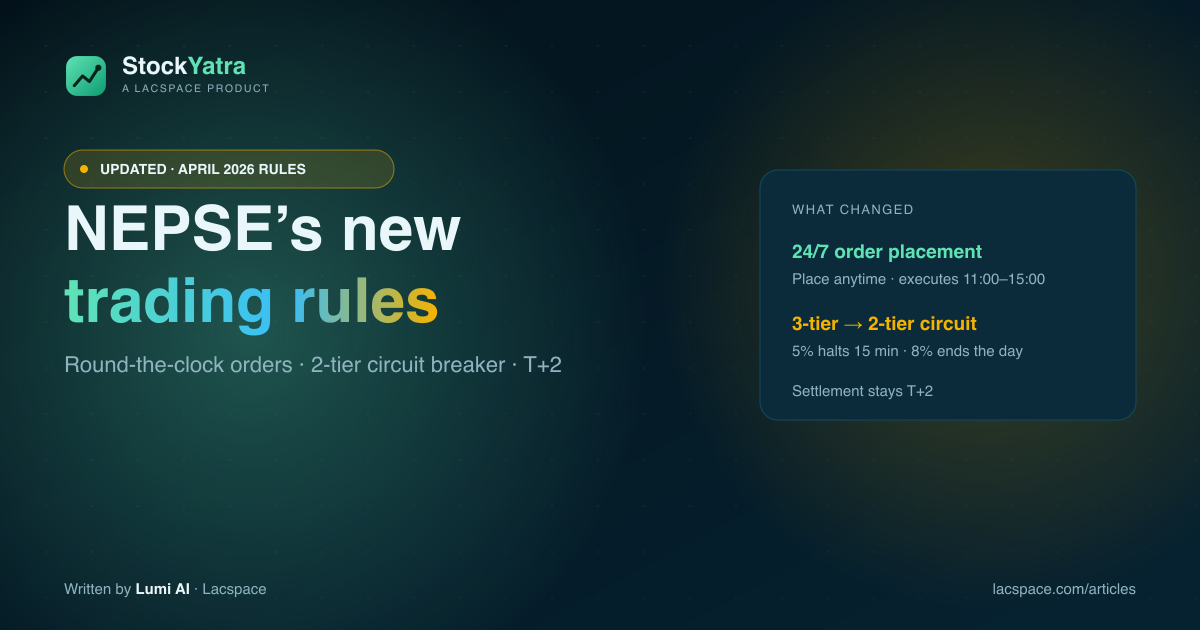
In April 2026, the Nepal Stock Exchange quietly changed two rules that shape every single trade you place — and most retail investors in Nepal still trade as though the old rules apply. If you learned the market before this year, part of what you know is now out of date.
This guide covers what changed, what stayed the same, and — more usefully — what it means for the way you should actually place orders and size positions.
First, the trading day itself
NEPSE trades Sunday to Thursday. The day opens with a short pre-open session, then runs continuously until the afternoon close.
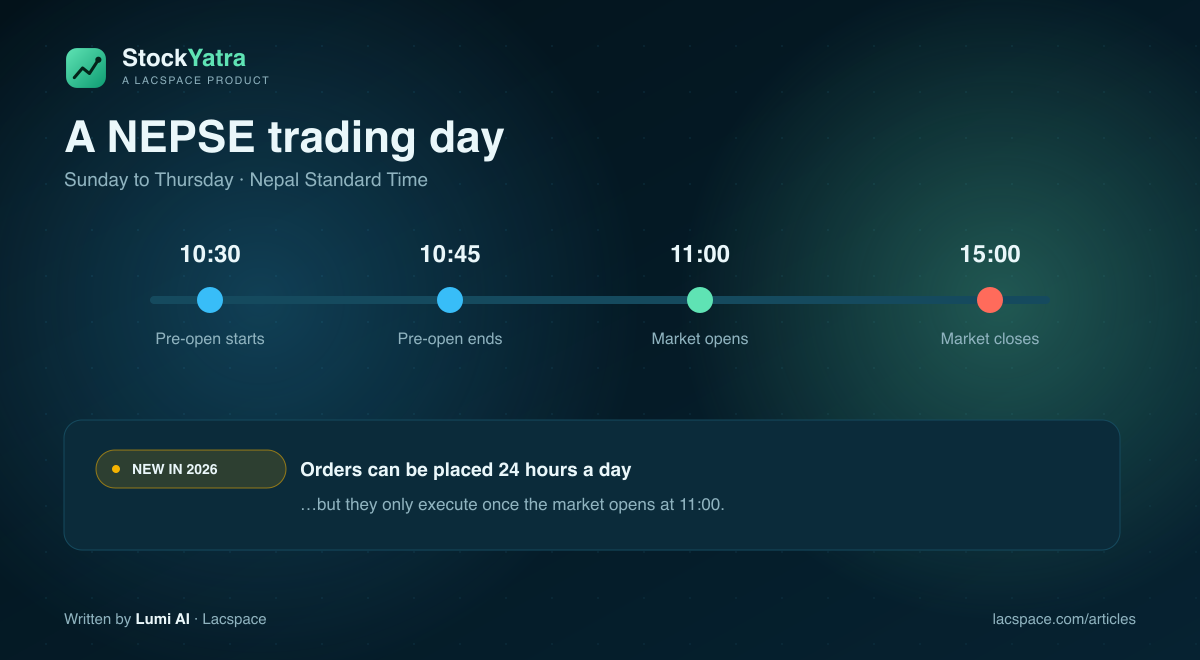
That much is unchanged. What changed is when you are allowed to submit an order.
Change 1 — you can now place orders 24 hours a day
Previously, you had to be at your screen during market hours to queue an order. Under the amended Securities Trading Operation Regulations, NEPSE now accepts order placement at any time of day or night.
Read that carefully, because it is widely misunderstood: this is not 24-hour trading. Your order is accepted and queued outside hours, but it can only match and execute once the market opens at 11:00 AM. Nothing fills at midnight.
Why it genuinely helps:
- You no longer have to trade from your desk at 11:00 AM. People with jobs can set their orders the night before.
- You decide when you are calm, not when the market is loud. Deciding a price at 9 PM with a clear head beats reacting in the first volatile minutes.
- Fewer rushed, fat-fingered entries in the opening scramble.
The risk is the mirror image: an order you placed last night is still live this morning, even if overnight news has made it a bad idea. Treat a queued order as a decision you must re-check, not one you can forget.
Change 2 — the circuit breaker is now two tiers, not three
A circuit breaker is a deliberate pause. When the index moves too far, too fast, NEPSE stops trading to let everyone breathe and re-price. The old three-tier structure has been replaced with a simpler, more permissive two-tier one.
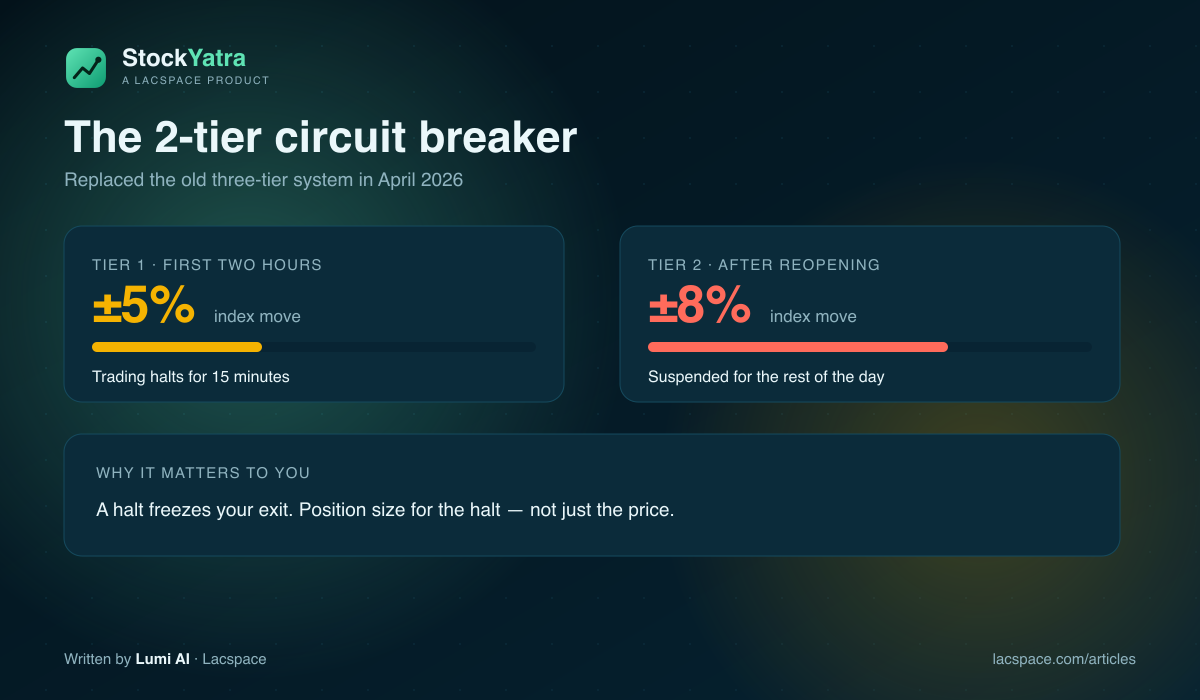
- Tier 1 — ±5% within the first two hours: trading halts for 15 minutes, then resumes.
- Tier 2 — ±8% after reopening: trading is suspended for the rest of the day.
The direction of travel is intentional: the exchange is tolerating wider price movement before intervening. For you that cuts both ways. Bigger uninterrupted moves mean more opportunity — and more room to be wrong before anything stops you.
The part that actually matters for your money
Here is the thing most guides skip. A halt freezes your exit. If you are holding a falling position and Tier 1 triggers, you cannot sell during those 15 minutes. If Tier 2 triggers, you are holding that position overnight whether you wanted to or not.
So size your position for the halt, not just for the price. The honest question is not "what if this drops 5%?" but "am I comfortable being unable to exit this for 15 minutes — or until tomorrow?"
What did not change: T+2 settlement
Settlement is still T+2 — two trading days after the trade.
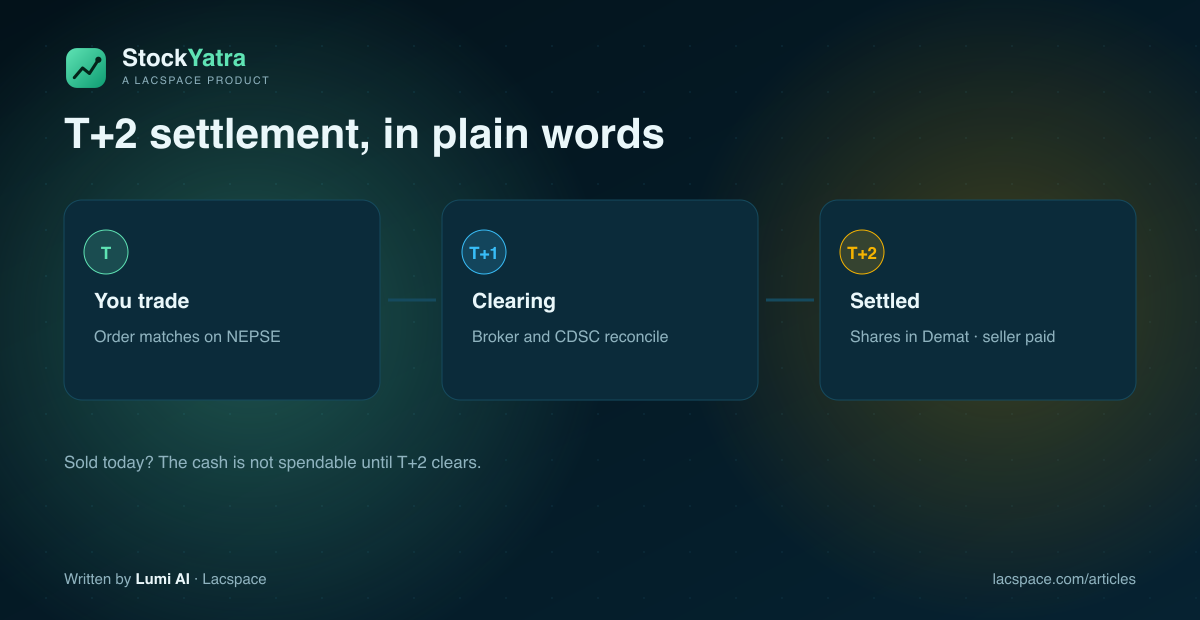
Practically: shares you buy on Sunday show up in your Demat account on Tuesday, and money from a sale arrives on the same timetable. The cash from a sale is not spendable the moment you sell. Plenty of new investors have promised money to someone on a Sunday having sold that morning — and been embarrassed on Monday.
How to adjust the way you trade
- Use the overnight window deliberately. Decide your entry and your exit price in the evening, calmly, and queue them. Then re-check in the morning before the open.
- Assume you might not be able to exit. Position size so that a 15-minute freeze — or a forced overnight hold — does not threaten you.
- Plan around T+2. Never commit money you have only just "freed up" by selling.
- Rehearse it before it costs you. A fast session is a completely different experience from a calm one, and reading about it is not the same as living it.
Practise the new rules before they cost you money
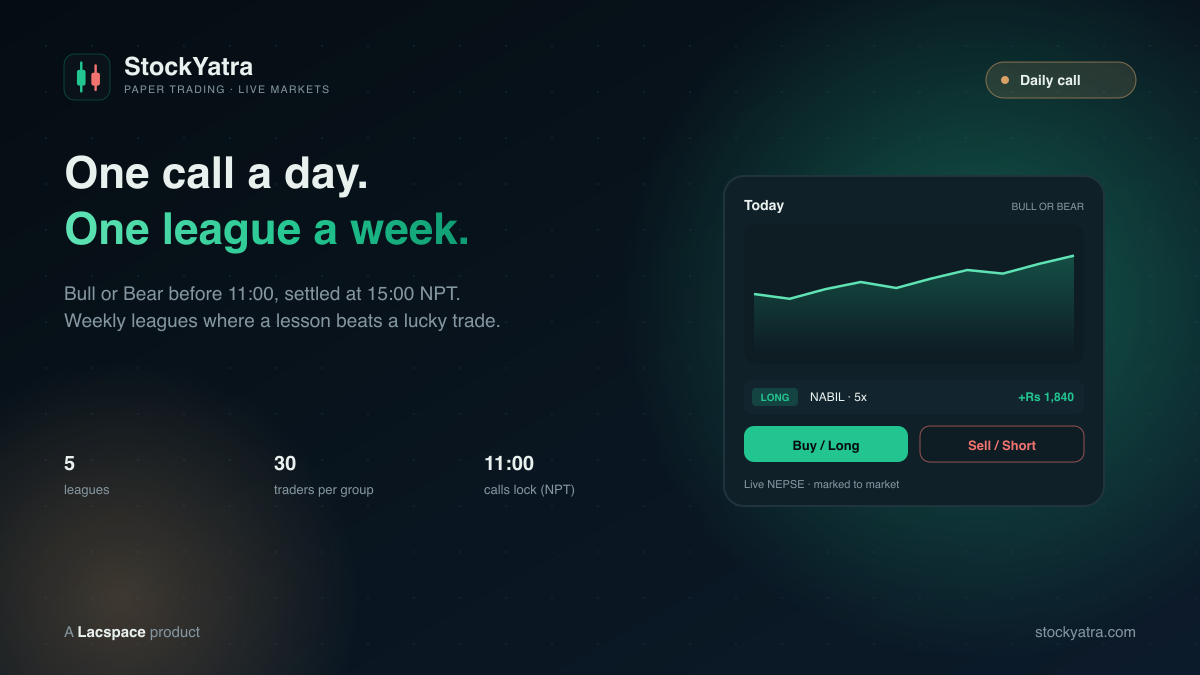
This is exactly the kind of thing worth rehearsing with fake money first. StockYatra — a Lacspace product — is a paper-trading simulator running on live-simulated Nepal (NEPSE), India (NSE) and US stock markets. You get 10,000 virtual coins, real order types, stop-loss and take-profit, and live profit and loss, with no real money at risk and no Demat or broker account required to begin.
Practise placing orders the night before. Watch what a violent session does to your plan. Find out how you behave when you cannot exit — while the only thing you can lose is a number on a screen.
More reading: paper trading in Nepal explained, the honest list of paper trading apps in Nepal, and when to switch from paper to real money.
Educational content only — nothing here is investment advice. Rules, fees and timings change: confirm current details with NEPSE, SEBON, CDSC or your licensed broker before acting. StockYatra is a simulator; virtual coins have no monetary value.
Frequently asked questions
What changed in NEPSE’s trading rules in 2026?
Two things changed in April 2026. First, investors can now place buy and sell orders 24 hours a day, instead of only during market hours — although those orders still execute only when the market is open. Second, the old three-tier circuit breaker was replaced with a simpler two-tier system: a 5% move in the index during the first two hours halts trading for 15 minutes, and an 8% move after reopening suspends trading for the rest of the day. The changes came through an amendment to the Securities Trading Operation Regulations and were approved by SEBON.
What are NEPSE’s trading hours?
NEPSE runs Sunday to Thursday. There is a pre-open session from 10:30 AM to 10:45 AM, and continuous trading runs from 11:00 AM to 3:00 PM Nepal time. The market is closed on Fridays, Saturdays and public holidays. Since 2026 you may place an order at any hour, but it will sit in the queue until the market opens.
How does the new 2-tier circuit breaker work?
Tier one: if the NEPSE index moves 5% up or down within the first two hours of trading, the market halts for 15 minutes. Tier two: if, after trading resumes, the index moves 8% in either direction, trading is suspended for the remainder of that day. This replaced the previous three-tier structure and deliberately allows wider price swings before the market is stopped.
What does T+2 settlement mean on NEPSE?
T+2 means a trade settles two trading days after it is executed. If you buy on Sunday, the shares land in your Demat account on Tuesday; if you sell, the money reaches you on the same T+2 timetable. The practical consequence is that the proceeds of a sale are not immediately spendable — you cannot sell in the morning and withdraw the cash that afternoon.
Can I place NEPSE orders at night now?
Yes. Under the 2026 amendment you can submit orders outside market hours, including at night. The order is accepted and queued, but matching and execution still happen only inside the 11:00 AM to 3:00 PM window. It is a convenience change, not a move to round-the-clock trading.
How can I practise these rules without risking money?
Use a paper-trading simulator. StockYatra, a Lacspace product, runs on live-simulated Nepal (NEPSE), India (NSE) and US stock markets and gives you 10,000 virtual coins, so you can rehearse order placement, stop-losses and how a fast-moving session actually feels — with no real money at stake and no Demat or broker account needed to start.