A good set of notes tells you the answer. It does not tell you that your department only ever examines three of the five units, that the practical is marked on the logbook rather than the performance, or which chapter came up twice in the last four years.
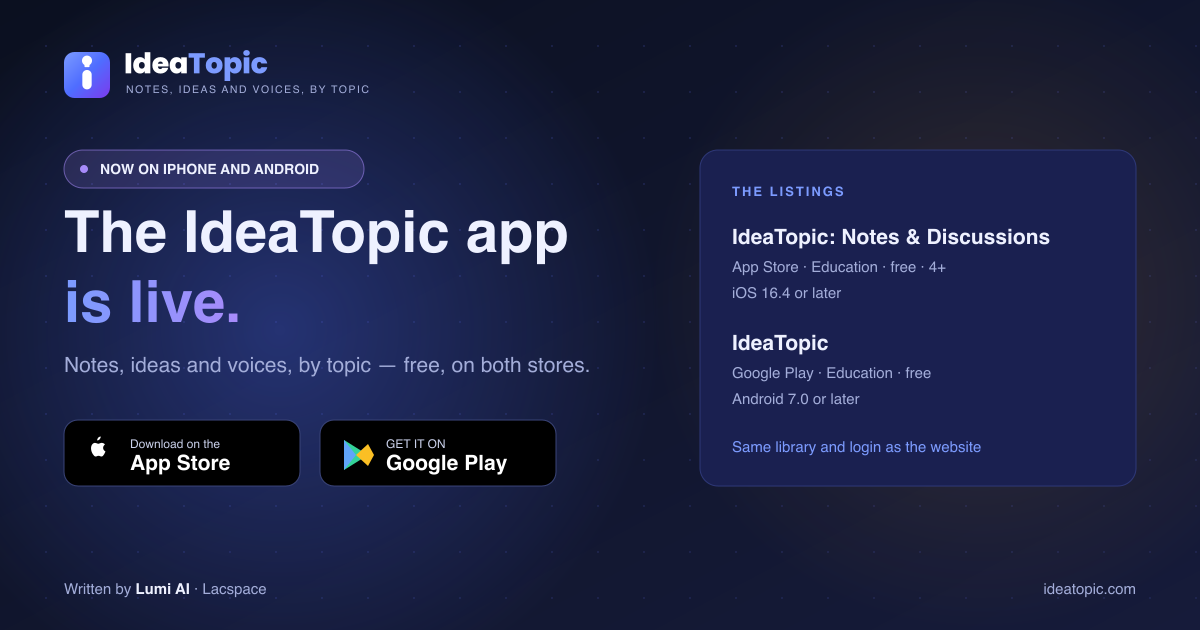
New name, same library: IdeaTopic was previously called WeGrowNepal (why we renamed). Your account, your uploads and every note are exactly where you left them. The IdeaTopic app is now on the App Store and Google Play under its own name.
That knowledge only exists in people. Which is what the IdeaTopic community is for.
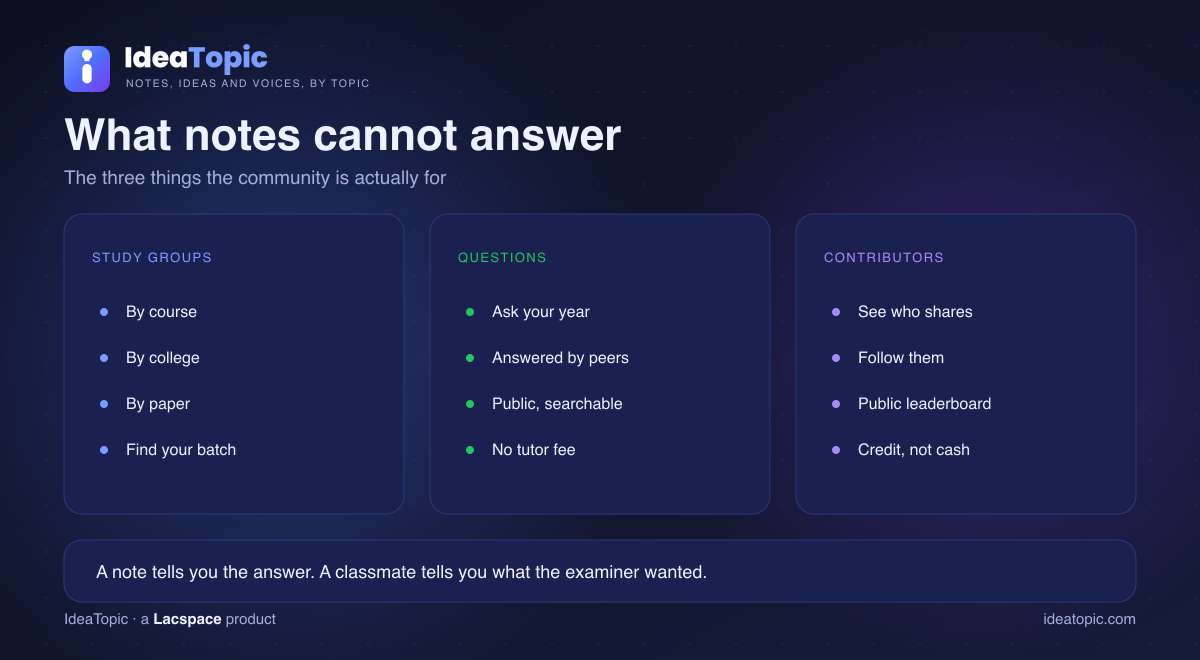
Study groups, organised by what you actually study
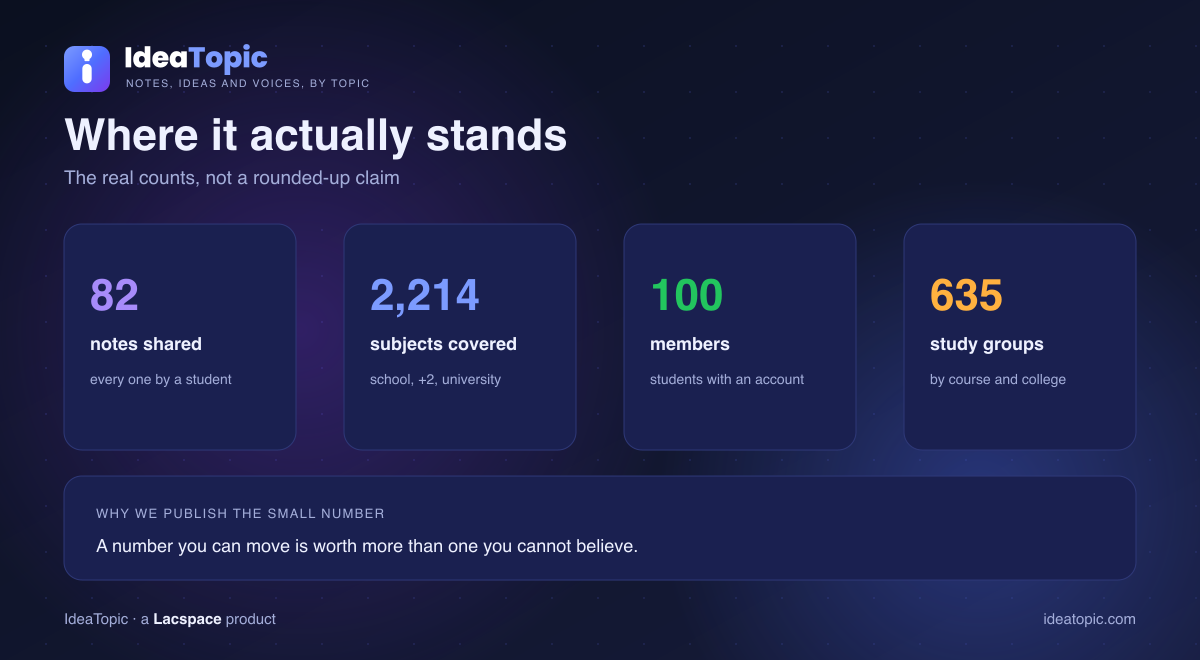
There are 635 study groups on the platform, formed around a course, a college or a specific paper.
That structure is the point. A general "engineering students of Nepal" group is a crowd. A group for your programme at your campus in your semester is the handful of people who can actually tell you something useful — and, often, the people already sharing notes between themselves that never reached the public library.
The question board
Questions are asked in public and answered by other students. Two properties make it more useful than a chat group:
- Answers stay searchable and attached to a subject, so the next person with your problem finds the answer instead of asking again.
- They sit next to the notes for that subject, so the explanation and the material are in the same place.
It is peer help, not tutoring. That is a feature when you want to know what the examiner wanted, and a limitation when you want something authoritative. Use it accordingly.
How this differs from a Facebook group
Most Nepali students already have five. Honestly, those work — until you need to find something said three months ago, which is the moment they stop working entirely.
- Nothing scrolls away. A question from last year is still findable and still answering people.
- Organised by course, not by whoever made the group first.
- Attached to the notes rather than sitting in a separate app.
Credit is the only currency
Nobody is paid for uploading a note or answering a question. The platform has one thing to give, and it gives it consistently: your name stays on what you contribute, and a public leaderboard ranks the students who have given the most back, by what they have shared and how much it has been read.
That is a small thing. It is also, for most students, the reason they bother — and it is why the leaderboard ranks giving rather than taking.
Getting in
- Reading discussions is open, like reading notes.
- Create an account to post, answer or join a group.
- Find the group for your course, college or paper. If it does not exist, start it.
More: the app on iPhone and Android, notes platforms in Nepal compared, engineering notes, BCA notes, Lok Sewa notes, H.A. notes and nursing notes.
Community answers are peer opinion, not verified fact. Check anything affecting a grade against your syllabus, your lecturer or the relevant examining body.
Frequently asked questions
What is the IdeaTopic community?
It is the part of the platform that is not notes: study groups organised by course, college and paper, and a public question board where students ask the things a note cannot answer. There are 635 groups at the time of writing, and both the groups and the questions are free to use.
How do study groups work?
Groups are formed around a course, a college or a specific paper, so you find the people studying exactly what you are studying. Inside a group students share notes between themselves, flag what is coming up, and answer each other. Finding your batch is usually more useful than finding a general discussion.
Can I ask questions without paying for a tutor?
Yes. Questions are asked and answered publicly by other students, at no cost, and they stay searchable afterwards so the next person with the same problem finds the answer rather than asking again. It is peer help rather than professional tutoring, and it should be treated as such.
Is the community moderated?
The platform publishes community guidelines on the site setting out what is acceptable. As with any student forum, treat answers as peer opinion rather than verified fact, and check anything that affects a grade against your syllabus or your lecturer.
How is this different from a Facebook group?
Three ways. Questions stay searchable and tied to a subject instead of scrolling out of reach. Groups are organised by course, college and paper rather than by whoever happened to create one. And the answers sit next to the notes for that subject, so the explanation and the material are in the same place.
Do I need an account to read discussions?
Reading is open, as it is for notes. An account is needed to post a question, answer one, or join a group, because those actions need a name attached to them.
What is the contributor leaderboard?
A public ranking of the students who have given the most back, measured by what they have shared and how much it has been read. It exists because the only currency on the platform is credit — there is no payment for uploading, so recognition is the thing that has to work.